
Bangkok isn't just a destination—it's a sensory explosion wrapped in neon lights, temple bells, and the aroma of grilled seafood. Thailand's capital is where ancient spirituality collides with ultramodern ambition, where you can meditate in a 600-year-old temple and then sip craft cocktails 61 stories above the Chao Phraya River. If you're planning a trip to Southeast Asia in 2026, this Bangkok travel guide is your roadmap to experiencing the best of the city without breaking the bank. What makes Bangkok so special isn't just its iconic landmarks—though the Grand Palace is genuinely breathtaking. It's the everyday magic: monks in saffron robes gliding through traffic on motorcycles, street vendors who've perfected their pad thai recipe over three generations, and locals who'll chat with you for hours over 50-cent beers. Whether you're a first-time visitor or returning explorer, this Bangkok travel guide 2026 will help you navigate the chaos, find the hidden gems, and eat like you're genuinely hungry. From practical logistics to neighborhood breakdowns to the best time to visit, we've got everything you need to make your Bangkok adventure unforgettable.
When to Visit Bangkok: Timing Your Perfect Trip
The best time to visit Bangkok is between November and February, when the weather is cool, dry, and genuinely enjoyable. During these months, temperatures hover around 75–85°F (24–29°C), versus the scorching 95°F+ (35°C+) of March through May or the monsoon downpours of June through October. If you're following this Bangkok travel guide 2026 recommendations, plan your visit for these sweet months—you'll actually want to walk around instead of ducking between air-conditioned malls.
December and January are peak tourist season, which means higher hotel prices and crowded temples, but also vibrant energy and the most reliable weather. If you prefer fewer crowds and slightly lower prices, aim for November or early February. As Michael Thompson, a budget traveler on wondr, shares: "I visited Bangkok in late November and found great hotel deals compared to December, plus the temples weren't absolutely packed with tour groups."
Avoid March through May—it's brutally hot and humid, and May marks the beginning of monsoon season. September and October see fewer tourists but frequent heavy rains that can limit outdoor activities. For this Bangkok travel guide 2026, we recommend planning around the November–February window for the optimal balance of weather, costs, and experience. Check the official Thailand tourism board for current conditions and local festivals happening during your travel dates.
Getting There: Flights, Visas & Arrival

Bangkok's Suvarnabhumi Airport (BKK) is the main international hub, located about 15 miles east of central Bangkok. Direct flights from the U.S. West Coast typically run $500–$800 USD round-trip if booked 6–8 weeks in advance. Start searching now for 2026 dates—early bookings unlock significant savings. **Book flights to Bangkok** to compare options across airlines.
Visa Information: U.S., UK, Canadian, and Australian citizens get a free 30-day tourist visa on arrival (often extendable). No pre-approval needed—just have your passport valid for 6+ months, a return ticket, and proof of onward travel. For detailed requirements, check travel.state.gov or your country's equivalent.
Getting from Airport to City: The Airport Link train (45 minutes, $2.75 USD) is the fastest, cheapest option, running every 15–20 minutes. Grab a taxi (metered, ~$12–$15) or Bolt/Grab ride ($8–$12 depending on traffic) if you prefer direct service with luggage. Avoid unmarked taxis—use official stands or apps.
Currency & Money: Thailand's currency is the Thai Baht (THB). 1 USD = ~35–37 Baht as of 2026. Exchange money at the airport or at SuperRich exchange booths (better rates than banks). ATMs are everywhere and typically charge $1–$3 USD per withdrawal. Credit cards work at hotels and malls, but street vendors, night markets, and small restaurants are cash-only. Bring $200–$300 USD in cash initially, then withdraw from ATMs as needed.
This Bangkok travel guide 2026 emphasizes arriving with realistic expectations: Bangkok is chaos, but organized chaos. Expect noise, pollution, traffic, and sensory overload—and expect to absolutely love it.
Where to Stay: Neighborhoods & Budget Hotels

Bangkok has distinct neighborhoods, each with its own vibe. Here's where different travelers should base themselves:
Silom: The business and nightlife district. Hotels run $30–$60 USD for clean, basic guesthouses. Patpong Night Bazaar is here—a famous (and touristy) night market. Great for solo travelers and nightlife seekers.
Khao San Road: The backpacker epicenter. Hostels range $8–$20 USD per dorm bed; cheap hotels $25–$40 USD. It's loud, chaotic, and exactly what young travelers expect. Skip the overpriced tourist trap bars and venture one block into local sois (alleys).
Sukhumvit: Modern, mall-heavy, and family-friendly. Hotels $40–$100+ USD. Better for travelers wanting comfort without sacrificing budget. Excellent street food scene on sois 38 and 39.
Riverside (Rattanakosin Island): Close to Grand Palace and Wat Pho. Hotels $35–$80 USD. More peaceful, walkable, fewer tourists than you'd expect. Excellent for temple exploration.
Ari/Phrom Phong: Local favorite neighborhoods with great restaurants, markets, and fewer tourists. Hotels $30–$60 USD. Quieter but still connected by BTS Skytrain.
**Find hotels in Bangkok** to compare prices across neighborhoods. Booking 2–3 months ahead secures better rates. Budget travelers should expect $35–$50 USD/night for a private room in a decent guesthouse; mid-range travelers $60–$120 USD; luxury options $150+ USD.
Street Food & Dining: Eat Like a Local (for $3–$10/meal)

Bangkok's greatest treasure isn't the temples—it's the food. This Bangkok travel guide 2026 puts street food first because it's genuinely where you'll have your most memorable meals.
Best Street Food Neighborhoods: - Yaowarat (Chinatown): The ultimate food destination. Narrow lanes crammed with noodle vendors, seafood stalls, and dim sum carts. Go at night (5 PM onwards). A full meal costs $2–$4 USD. - Soi 38 & 39 (Sukhumvit): Open-air food markets where locals actually eat. Grilled fish, papaya salad, mango sticky rice. $2–$5 USD per dish. - Chatuchak Weekend Market Food Zone: Over 15,000 stalls. The food section has everything—grilled insects, Thai crepes, fresh mango. Budget $15–$25 USD for a full grazing experience.
Must-Try Dishes: - Pad Thai ($1.50–$3): Get it from a street vendor, not a tourist restaurant. Best at Thip Samai (Maha Nakhon) or any night market. - Pad Krapow Moo (spicy pork with holy basil): $2–$3. Order with a fried egg on top. Eat standing up at a street counter. - Tom Yum Goong (shrimp soup): $3–$5 from a proper shop. - Mango Sticky Rice: $1–$2. Seasonal (best April–June), but available year-round at markets. - Satay with Peanut Sauce: $1–$2 per skewer. Found everywhere.
Restaurant Recommendations: - Paste (multiple locations): Modern Thai, $15–$25 USD per person. Reservations essential. - Err (Multiple locations): Isaan (Northeastern Thai) specialties. $5–$10 USD, no frills, incredible food. - Hua Seng Hong (Yaowarat): 70+ years old, roasted duck and noodles, $3–$5 USD.
As Emma Rodriguez, a foodie traveler on wondr, notes: "Street food vendors in Yaowarat taught me more about Thai flavor than any cooking class. I ate at a different stall every night and spent maybe $50 total for a week of dinners."
Pro Tips: - Eat where locals eat. If there's a queue, join it. - Carry small bills—many vendors can't change large notes. - Ask for "mai pet" (not spicy) if you can't handle chili, or "pet nit noi" (a little spicy) to seem adventurous. - Tap water isn't drinkable; buy bottled water ($0.50–$1 USD) or order drinks at shops.
Top Attractions: Temples, Markets & City Views

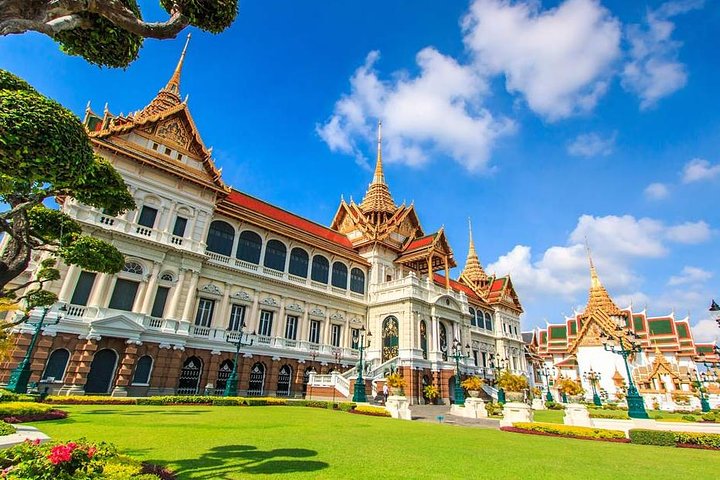
Grand Palace & Wat Pho (Rattanakosin Island) The most iconic temple complex in Thailand. The Grand Palace has been the residence of Thai kings since 1782. Wat Pho houses the massive reclining Buddha (148 feet long, covered in gold leaf). Entrance: $14 USD (Grand Palace only; Wat Pho is $5 USD).
*What to know*: Dress respectfully (covered shoulders and knees). Arrive before 8:30 AM to beat crowds. Tours are $30–$50 USD but unnecessary—grab a guidebook ($2 USD) and explore independently. Photography banned inside main temple buildings.
Chatuchak Weekend Market The world's largest weekend market—15,000 vendors spread across 27 acres. Everything from antiques to street food to live animals. Open Saturday–Sunday, 9 AM–6 PM. Free entry. Budget $30–$50 USD for a half-day visit with food and souvenirs. Go early (before 11 AM) for tolerable crowds and best selection.
Rooftop Bars with Panoramic City Views Bangkok's skyline is stunning at sunset and after dark. Top options: - Octave (61st floor, Thonglor): $20–$30 USD cocktails, stunning city views, upscale crowd. - Vertigo (61st floor, Banyan Tree): $25–$35 USD cocktails, rooftop garden, romantic vibes. - Above Eleven (48th floor, Thonglor): $15–$25 USD cocktails, less crowded, still incredible views. - SkyBar (Sky Hotel, Sukhumvit): $20–$28 USD cocktails, iconic spot, expect tourists.
As Yuki Tanaka, a city-break and nightlife traveler on wondr, shares: "The rooftop bars are pricey by Bangkok standards, but one evening drink with city panoramas is worth the splurge. I went to Octave at sunset and it was the highlight of my trip."
Other Worth-Your-Time Temples: - Wat Saket (Golden Mount): 260 steps to hilltop temple with city views. $3 USD. Less crowded than Grand Palace. - Wat Chim Phli (Marble Temple): Peaceful, beautiful, rarely crowded. $2 USD. Take BTS to Thewet station.
Practical Info: Use the BTS Skytrain map (elevated train) for navigating attractions. Single journeys cost $0.75–$3 USD. A rechargeable card (Rabbit Card) saves time at every station.
Day Trips from Bangkok: Ayutthaya & Floating Markets

Bangkok travel guide 2026 wouldn't be complete without exploring surrounding regions. The best day trips are achievable by train or organized tour:
Ayutthaya (1.5 hours by train, $1–$2 USD) Thailand's ancient capital (1351–1767) is a UNESCO World Heritage site with stunning temple ruins. Must-sees: Wat Mahathat (famous Buddha head inside tree roots), Wat Phra Si Sanphet, Wat Chaiwattanaram.
*How to do it*: Take the early train from Bangkok's central station (6 AM departure), spend 6 hours exploring by bicycle ($3–$5 USD rental), return on evening train. Total cost: $20–$30 USD including meals and entry fees ($3–$5 per temple).
Floating Markets Damnoen Saduak (100 km, 2 hours) is the most famous but touristy. Ampawa (30 km, 45 minutes) is more authentic and less crowded.
*What to expect*: Vendors in wooden boats selling produce, flowers, and food. Visit early morning (6–8 AM) when locals shop. Guided tours run $25–$40 USD from Bangkok; independent travel costs $10–$15 USD via minivan.
Kanchanaburi (2.5 hours by train, $3–$5 USD) Famous for the Bridge over the River Kwai, war museums, and natural springs. Great for a 1–2 day trip. Hotels from $20–$40 USD.
As James Chen, a general traveler on wondr, notes: "The Ayutthaya day trip was my favorite part of Bangkok's region. I rented a bicycle and got completely lost, but finding small temples and local lunch spots made it unforgettable—and cost almost nothing."
Mini-vans and guided tours are easy to book through hotels or through apps like Klook. This Bangkok travel guide 2026 recommends booking day trips a day or two in advance rather than relying on last-minute tours.
Transportation in Bangkok: BTS, MRT & Taxis

Bangkok's public transportation is cheap, reliable, and covers most tourist areas. Understanding the system makes exploration effortless.
BTS Skytrain (Elevated) Modern, clean, air-conditioned. Covers central Bangkok with two main lines (Sukhumvit and Silom/Saphan Taksin). Single journey: $0.75–$3 USD depending on distance. Buy a Rabbit Card (rechargeable, $5 USD) to skip ticket queues.
MRT (Underground Subway) Deeper coverage, similar pricing. Three main lines. Slightly slower but essential for reaching some neighborhoods.
Chao Phraya River Boats The scenic, local way to travel. Express boats between piers cost $0.50–$2 USD. Hop on to see Bangkok from water level.
Taxis & Tuk-Tuks Taxis: Use metered cabs only or Grab/Bolt apps ($2–$8 USD typical journeys). Tuk-tuks: The iconic three-wheeled vehicles. Agree on price beforehand; avoid unmarked ones. $3–$6 USD for short journeys. They're slower than BTS but fun for experiencing Bangkok's streets.
Grab App (like Uber) Download it immediately. Safer than unmarked taxis, transparent pricing, driver ratings. Available 24/7. Similar costs to taxis but with accountability.
Pro Tip: Get a Rabbit Card within 24 hours of arrival. You'll use BTS constantly, and the card saves 5–10% versus single tickets. Cards sold at every BTS station for $5–$6 USD initial purchase (includes $0.75–$1 USD in credit).
Traffic Reality: Bangkok traffic is legendary for a reason. Plan extra time for any journey during rush hours (7–10 AM, 5–8 PM). Use apps to check estimated times. This isn't a destination for rushing—embrace the chaos and enjoy the ride.
Find Travel Companions for Bangkok

Traveling solo to Bangkok? You don't have to. Right now, 31 travelers on wondr are actively looking for companions to explore Bangkok together—people just like you, planning their 2026 Bangkok trips and seeking travel buddies for temples, street food adventures, rooftop bar evenings, and Chatuchak Market explorations.
Traveling with companions transforms a trip. Share the costs of day tours, enjoy meals with locals who become friends, explore hidden neighborhoods safely together, and create memories with people who actually understand why that street vendor's pad thai made you cry happy tears.
How wondr helps: wondr's companion finder lets you filter by travel style (budget travelers finding budget travelers, foodies finding foodies, adventure seekers finding adventure seekers), travel dates, neighborhoods, and interests. Many wondr travelers have found lifelong friends through Bangkok trips—and saved money splitting accommodations and tours.
[Find your Bangkok travel companions on wondr](/find-companions/bangkok)—it takes 90 seconds to set up a profile, and you could match with someone heading to Bangkok the same dates as you.
Whether you're seeking one travel buddy for your entire 2–3 week Bangkok adventure or just a companion for a day trip to Ayutthaya, wondr's community of verified travelers makes finding your people simple. Many companions split shared Airbnb apartments (cutting accommodation costs in half) or buddy up for organized tours (bigger groups = better negotiated prices).
This Bangkok travel guide 2026 recommends connecting with travel companions at least 2–3 weeks before your trip. You'll have time to plan together, save money on group rates, and arrive in Bangkok already having friends waiting.
Safety, Practical Tips & What to Pack

Bangkok is safe for tourists who use common sense. Per UK gov.uk travel advice, Bangkok is generally secure, though petty theft in crowded areas is common. Avoid political demonstrations, don't disrespect the monarchy, and exercise caution at night in isolated areas.
Safety Essentials: - Keep valuables in hotel safes; carry minimal cash and one credit card when out. - Use registered taxis or Grab/Bolt apps rather than hailing unmarked vehicles. - Avoid dark sois (alleys) after midnight unless you know the area. - Watch drinks at bars; drink spiking is rare but possible in tourist areas. - Sun protection is essential—Bangkok sun is intense. SPF 50+ sunscreen ($5–$8 USD at 7-Eleven) is non-negotiable.
Health Considerations: - Tap water isn't drinkable. Bottled water is everywhere ($0.50–$1 USD). - Street food is safe if purchased from busy stalls (high turnover = fresh food). Use your judgment. - Travel insurance is recommended, especially for activities like motorcycle rentals or water sports. - Pharmacies are abundant; most medications available without prescription.
What to Pack for This Bangkok Travel Guide 2026: - Lightweight, breathable clothing (cotton, linen). You'll sweat, so bring extras. - Respectful clothing for temples (covered shoulders/knees). Sarongs cost $3–$5 USD if you forget. - Comfortable walking shoes (you'll do 15,000+ steps daily). - Small backpack for day trips and market exploring. - Hat and sunglasses (sun is fierce). - Portable charger (walking all day drains phones quickly; powerbanks cost $10–$20 USD). - Lightweight rain jacket (occasional showers even in dry season). - Camera (Bangkok is photogenic; phone cameras are fine, but a dedicated camera captures nuance).
Cultural Respect: - Thais are gentle, gracious people. Learn three phrases: "Sawadee krap/ka" (hello), "Khob khun krap/ka" (thank you), "Mai phet" (not spicy). The effort wins hearts. - Never disrespect the Thai royal family—it's illegal and deeply offensive. - Remove shoes when entering temples and homes. - Show respect to monks; women shouldn't touch them or hand items directly (place on a surface instead). - Use your right hand for eating, greeting, and giving items.
Practical Logistics: - SIM cards: Buy at airport ($3–$5 USD) with unlimited data. Thai providers include AIS, Dtac, True Mobile. Data speeds are excellent. - Luggage storage: Hotels hold bags for $2–$5 USD/day if you depart early. - Laundry: Every guesthouse offers $2–$4 USD same-day service.
As Rachel Green, a general traveler on wondr, shares: "My biggest regret was packing too much. Bangkok's heat demands minimal luggage. I rewore clothes constantly and wished I'd brought just two pairs of shoes."
This Bangkok travel guide 2026 emphasizes: Bangkok rewards flexibility, patience, and an open heart. You'll get lost; that's where the best discoveries happen.
💡 Quick Tips
- →Visit temples early morning (before 8:30 AM) to avoid crowds and experience the spiritual atmosphere when monks are meditating.
- →Eat only from busy street food stalls—high turnover ensures fresh food, and watching vendors prepare meals confirms safety.
- →Buy a Rabbit Card (BTS rechargeable transport card) within 24 hours of arrival; it's essential for efficient Bangkok navigation and saves 5–10% on fares.
- →Negotiate tuk-tuk prices before riding—agree on a price destination-first. Otherwise, use Grab/Bolt app for transparent, fixed pricing.
- →Learn three Thai phrases (hello, thank you, not spicy); locals reward even minimal language effort with warmth and better service.
- →Visit Chatuchak Market between 9–11 AM on Saturday or Sunday; arriving later means crowds, heat, and depleted vendor stock.
- →Keep a small notepad to write or draw landmarks if language barriers arise—Thai people appreciate the effort and respond helpfully.
- →Budget $30–$50 USD daily for accommodation and meals if traveling on a budget; mid-range travelers should expect $70–$120 USD daily including activities.
Share this destination
Ready to visit Bangkok?
See hotels, activities, and deals — or let AI build your full itinerary.
Top things to do in Bangkok


Compare Destinations