
Tokyo is one of the world's most solo-traveler-friendly cities—safe, efficiently connected, and endlessly fascinating. But finding the right place to stay can make or break your experience. The best hostels in Tokyo for solo travelers aren't just about having a bed; they're about community, location, and unlocking what makes this incredible city so magical. Whether you're planning to catch cherry blossoms in spring (March–May), experience the perfect autumn weather (October–November), or explore year-round, choosing where to stay matters. After helping countless travelers navigate Tokyo's neighborhoods and connecting people who want to explore together on wondr, we've learned which hostels deliver genuine connection, cleanliness, and proximity to the experiences that make Tokyo unforgettable. In this guide, we'll walk you through the best hostels in Tokyo for solo travelers, broken down by neighborhood and travel style. You'll discover real pricing, practical logistics, and insider tips from experienced solo travelers. We'll also show you how to connect with other travelers heading to Tokyo—right now, 38 travelers on wondr are actively looking for companions to explore the city together. Let's find your perfect Tokyo home base.
Why Tokyo is Perfect for Solo Travelers (and Why Hostels Are Your Best Bet)
Tokyo has a reputation for being expensive, and parts of it are—but the truth is more nuanced. Mid-range travel is absolutely possible here, and hostels are your gateway to both affordability and community.
First, the safety factor. Tokyo consistently ranks as one of the safest major cities globally. The trains run on time (literally—average delay is 18 seconds), staff at every station speak English, and the city's culture of respect extends to travelers. Solo travelers, especially women, report feeling safer in Tokyo than in most Western capitals.
Second, hostels in Tokyo aren't backpacker stereotypes. They range from minimalist design-focused spaces to social hubs with daily events. Many cater specifically to solo travelers seeking community without sacrificing privacy. Dorm beds typically range from $25–45 USD per night, while private rooms in hostels run $50–90 USD—significantly cheaper than hotels in comparable locations.
Third, Tokyo's excellent public transport (JR rail, subway, buses) means your hostel location determines your experience more than anywhere else. The best hostels in Tokyo for solo travelers aren't randomly scattered—they're strategically positioned in neighborhoods that balance culture, food, nightlife, and accessibility.
As Marcus Johnson, a mid-range budget traveler on wondr, notes: "Hostels in Tokyo gave me instant friends while keeping costs down. I'd pay $30 for a dorm bed and spend the savings on incredible meals at tiny Shibuya ramen shops." That mindset—investing in experiences over accommodation—is the Tokyo solo traveler way.
Top Neighborhoods for Best Hostels in Tokyo for Solo Travelers
Shinjuku: Energy & Neon
Shinjuku is Tokyo's pulsing heart—neon-lit streets, towering department stores, and nightlife that runs until dawn. It's also where you'll find some of the best hostels in Tokyo for solo travelers seeking high energy. Hostels here tend to host younger travelers and backpackers. Expect lively common areas, regular pub crawls, and easy access to Shibuya Crossing (three stops on the JR line). The trade-off: noisier streets, more crowded, fewer quiet corners.
Shibuya: Iconic & Walkable
Famous for the world's busiest intersection, Shibuya offers a better balance than Shinjuku. Hostels here put you steps from fashion boutiques, karaoke bars, and the scramble crossing (best visited early morning before crowds, as Sarah Mitchell, an adventure traveler on wondr, discovered). This neighborhood attracts a slightly older demographic of solo travelers—people in their late 20s to 40s. Prices run slightly higher; dorms average $35–45 USD.
Harajuku & Omotesando: Quirky & Cultural
Harajuku is Tokyo's creative playground—vintage shops, trendy cafes, and the chaotic Takeshita Street. It's less hostel-dense than Shinjuku but offers authentic Tokyo culture. Solo travelers here tend to be fashion-conscious and experience-driven. Walking distance to teamLab Borderless digital art museum (¥3,200 or ~$22 USD entry).
Asakusa: Traditional & Photogenic
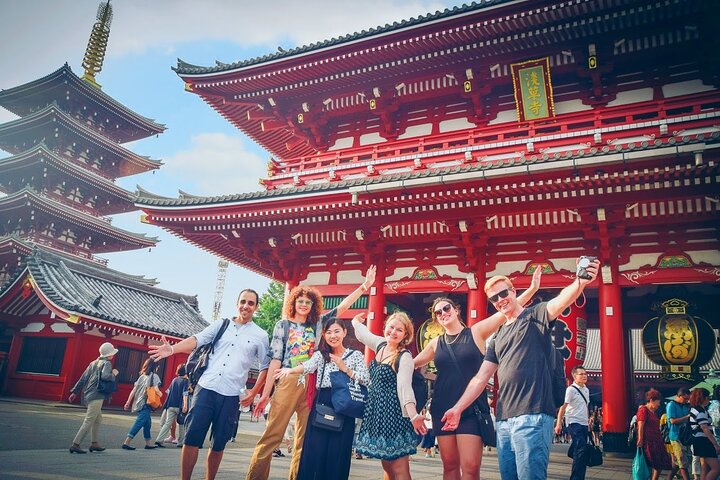
Home to Senso-ji Temple and surrounded by traditional wooden buildings, Asakusa appeals to culture-focused travelers. Hostels are fewer but tend toward quality over quantity. This neighborhood feels like old Tokyo—quieter, more spiritual, less party-focused. Perfect if you're seeking depth over nightlife. Excellent base for exploring traditional temples and the nearby Tsukiji Outer Market for fresh sushi breakfast (budget $8–15 USD for an incredible meal).
Ikebukuro: Underrated & Affordable
West of central Tokyo, Ikebukuro offers excellent value and authentic neighborhood vibes. The best hostels in Tokyo for solo travelers on tighter budgets often cluster here. You're farther from Shibuya's glamour but closer to real Tokyo—local restaurants, authentic bars, and genuine encounters with residents. Train connectivity is excellent (multiple JR and subway lines).
Best Hostels in Tokyo for Solo Travelers: Detailed Recommendations
Nui. Hostel & Lounge Bar (Kuramae)
Nui. represents the new generation of Tokyo hostels—design-forward, community-focused, and genuinely excellent. Located in Kuramae (on the Asakusa Line), it occupies a restored 1970s textile warehouse. Dorm beds: $32–40 USD. Private rooms: $70–95 USD. The bar downstairs hosts regular events, the kitchen is excellent, and you'll meet travelers from 40+ countries. Staff actively organize neighborhood walking tours. Proximity to Asakusa (one train stop) means you're near temples but still feeling contemporary.
Tokyo International Hostel (Iidabashi)
If you want reliable, central, and social, Tokyo International Hostel delivers. Located near Iidabashi Station (Oedo and Tozai lines), it's remarkably well-positioned—20 minutes to Shibuya, 15 minutes to Asakusa. Dorms: $28–36 USD. The common areas consistently attract solo travelers, and management organizes daily social events. Rooms are clean, lockers are secure, and there's a small bar. It's less trendy than Nui. but more consistently reliable for meeting people.
Mitsuwaya Hostel (Shinjuku)
For pure social energy, Mitsuwaya is legendary among backpackers. Located steps from Shinjuku Station's east exit, it's the epicenter of Tokyo's hostel party scene. Dorms: $25–32 USD (among the cheapest in central Tokyo). The common areas overflow nightly, pub crawls leave regularly, and you'll meet hundreds of travelers. Not ideal if you want quiet, but perfect for solo travelers seeking immediate community. Fair warning: it feels like a college dorm, which some travelers love and others want to escape.
Khaosan Tokyo Kabuki (Asakusa)
In the heart of Asakusa, near Senso-ji Temple, Khaosan Kabuki targets culture-minded backpackers. Dorms: $30–38 USD. The rooftop terrace overlooks traditional wooden buildings, the staff speaks excellent English, and it's a genuine community space rather than a party hostel. Proximity to Tsukiji Outer Market (walking distance) and traditional temples makes it ideal for experiencing historical Tokyo. Less party atmosphere than Shinjuku options but higher quality of travelers and experiences.
Sakura Hotel Hatagaya (Hatagaya)
Slightly north of central Tokyo but exceptional value. Dorms: $22–30 USD. Run by a family genuinely interested in traveler experience, Sakura Hotel has multiple locations, but Hatagaya is particularly good for solo travelers. It's quieter, more community-oriented, and you'll meet long-term and mid-term travelers (people spending weeks, not just nights). Not as convenient to Shibuya/Shinjuku but excellent for deeper cultural immersion and value.
Practical Logistics: Getting There, Getting Around, Staying Safe
Flights & Entry
Most international travelers arrive at either Narita International Airport (60km east, 60–90 minutes to central Tokyo) or Haneda Airport (14km south, 30 minutes to central). Haneda is significantly more convenient. [Book flights to Tokyo](/book/flights-to/tokyo) well in advance if traveling during cherry blossom season (late March–early April)—prices spike 40–60%.
US citizens need a passport valid for six months beyond arrival. Japan offers 90-day tourist visas on arrival (no pre-approval needed). If you're from Canada, UK, Australia, or New Zealand, similar rules apply. Always check current requirements; visa policies shift.
Money & Costs
Japan is primarily cash-based outside major chains. Withdraw yen at airport ATMs or 7-Eleven convenience stores. Mid-range solo travel costs roughly $50–80 USD daily (hostel $30–40, meals $15–25, activities $5–15). The yen typically trades around 145–150 yen per USD (verify current rates).
Cash withdrawals incur ~$2–4 USD fees per transaction, so withdraw larger amounts less frequently. Credit cards work in major restaurants and hotels but assume cash-only for small shops and street food. Suica or Pasmo cards (rechargeable transit cards, ~$10 USD initial cost) save money on trains and buses—tap and go like London's Oyster card.
Transport & Navigation
Tokyo's public transport is flawless. Download Google Maps (works perfectly in Japan) and the Suica app. JR Yamanote line is the main loop connecting all major neighborhoods—a single trip costs ¥170–200 (~$1.15–1.35 USD). Subway lines are numbered and color-coded; even non-Japanese speakers navigate easily.
Taxis are expensive (¥2,100 or ~$14 USD for short trips) and unnecessary given excellent public transport. Bikes are available through rental shops near major stations—flat Tokyo terrain is bikeable.
Safety & Cultural Considerations
Tokyo is exceptionally safe. That said, several practices matter: keep valuables secure (pickpocketing is rare but happens in crowded areas), don't eat while walking (considered rude), and remove shoes when entering homes, temples, or certain restaurants. Public drunkenness is very uncommon and frowned upon—even at bars, pace yourself.
Most Tokyoites speak limited English outside tourist areas. A translation app (Google Translate works offline) is invaluable. Learning basic phrases (arigatou gozaimasu = thank you very much; sumimasen = excuse me) goes far. People appreciate effort.
Train etiquette: don't talk on phones, stand on the correct side of escalators (left in Tokyo, right in Osaka), and avoid sitting in priority seats unless elderly or disabled. Hostels provide cultural orientation—ask staff for neighborhood customs.
Must-Do Experiences Near Your Hostel (and How to Actually Do Them)
Shibuya Crossing & Harajuku: The Tourist Must-Do Done Right
Yes, Shibuya Crossing is touristy. But it's genuinely surreal—2.5 million people cross it daily. The secret: go at 2–3 AM (empty and eerie) or early morning (6–7 AM, peaceful). From any central hostel, it's a 10–30 minute train ride. Harajuku is attached; walk the Omotesando shopping street and explore side alleys for vintage shops.
Tsukiji Outer Market for Breakfast (~$10–15 USD)
Walk to Tsukiji Station from your hostel. The outer market (inner market is now Toyosu, less accessible) offers the most authentic sushi breakfast in Tokyo. Arrive by 8 AM—vendors close by 11 AM. Stands serve fresh nigiri sushi, tuna rolls, and miso soup. Budget $12 for excellent quality. This is where real Tokyoites eat, not tourist restaurants.
teamLab Borderless Digital Art Museum (¥3,200 or ~$22 USD)
One of the most Instagram-famous experiences in Tokyo, it's worth the hype. Immersive digital art installations fill entire rooms. It's in Odaiba (artificial island, accessible by the Yurikamome automated train). Go midweek, not weekends. Expect 2–3 hours minimum; it's transcendent. Many solo travelers go alone and return multiple times during their stay.
Cherry Blossoms (Late March–Early April)
If visiting spring, Ueno Park is the epicenter. Thousands gather for hanami (blossom viewing) parties. Your hostel will know the peak bloom dates. Go early morning for quieter appreciation, evening for festive crowds and yukinko (food stalls). It's free and overwhelmingly beautiful.
Mount Fuji Day Trip
From Shinjuku Station, the train to Kawaguchiko (2 hours, ¥2,600 or ~$17 USD) puts you at Japan's most iconic mountain. Clear days (more frequent October–November) reward you with stunning views. Hike the perimeter lake trail or take photos from the town. Hostel staff can recommend guides; solo travelers often spontaneously team up on this trip.
Nightlife & Entertainment
Karaoke is quintessential Tokyo. Private rooms cost ¥1,500–2,500 per hour (~$10–17 USD). Hostels often organize group karaoke nights—join even if you're shy. Yuki Tanaka, a nightlife and city-break traveler on wondr, shares: "Karaoke with hostel strangers in Shinjuku was the highlight of my Tokyo trip—we bonded over terrible singing more than anything else."
Rooftop bars in Shinjuku offer skyline views; expect ¥1,000+ (~$7+ USD) per drink. Izakayas (Japanese pubs) are better value—¥500 (~$3.50 USD) per small dish, ¥600 (~$4 USD) per beer. Your hostel staff will recommend neighborhood favorites cheaper than guidebooks suggest.
Find Travel Companions for Tokyo
One of the best-kept secrets about solo travel is that you don't have to do it alone—you just get to choose your companions. Right now, 38 travelers on wondr are looking for companions to explore Tokyo together. Whether you want a karaoke buddy, someone to navigate Tsukiji Market with, or a friend for a Mount Fuji day trip, you can find them before you arrive.
Many solo travelers discover that the best hostels in Tokyo for solo travelers aren't just about the beds—they're about meeting people with shared interests. But what if you want to travel with someone who has a similar vibe before arriving? [Find travel companions for Tokyo](/find-companions/tokyo) on wondr and connect with other solo travelers planning their Japan trip. Browse profiles, chat about travel styles, and coordinate your hostel stays or activities.
Wondr makes it simple: create a traveler profile, see who else is heading to Tokyo, filter by travel dates and interests, and message potential travel buddies. Many wondr travelers end up in the same hostel (coincidentally or by choice), making the social transition smoother.
You'll find people planning 3-day Tokyo visits, 2-week Japan adventures, and everything between. Some are looking for someone to share private hostel rooms and split costs. Others want to meet daily for meals and activities but have independent evenings. Whatever your solo travel style, wondr helps you customize it.
The reality: traveling solo doesn't mean traveling lonely. The best hostels in Tokyo for solo travelers facilitate connection, but wondr connects you before you even book your flight.
When to Go & How to Book Your Hostel
Best Seasons & Crowd Patterns
March–May (spring): Cherry blossoms, mild weather, packed crowds, premium prices. Early March is cheaper than peak April. October–November (autumn): Perfect weather, fall colors, moderate crowds, excellent value. Summer (June–August) brings humidity and heat. Winter (December–February) is quiet and cold but less crowded.
For the best hostels in Tokyo for solo travelers at good prices, aim for May or late October. You get season benefits without peak-season pricing.
Booking Strategy
Book 4–6 weeks in advance for spring travel, 2–3 weeks for other seasons. Use Hostelworld (reviews from 100K+ travelers), Booking.com (price comparisons), or Agoda (sometimes cheapest). Compare prices—the same hostel may cost 10–20% different depending on the platform.
Read recent reviews specifically mentioning solo travelers. Look for comments about social atmosphere, cleanliness, and staff knowledge. Avoid hostels with consistent complaints about noise after midnight if you're a light sleeper.
Book direct with hostels sometimes yields discounts for multi-night stays (5+ nights often gets 10–15% off). Email and ask: "I'm a solo traveler staying [dates]. Do you offer discounts for 7+ nights?" Many do.
Final Booking Resources
[Find hotels in Tokyo](/book/hotels-in/tokyo) if you want to explore boutique options beyond hostels. [Plan your Tokyo trip](/plan?destination=Tokyo) on wondr and let our AI itinerary builder customize a day-by-day experience based on your interests, budget, and travel dates. It'll recommend activities near your chosen hostel and suggest optimal timing for experiences like cherry blossom viewing or Mount Fuji day trips.
💡 Quick Tips
- →Book your hostel 4-6 weeks in advance during cherry blossom season (late March-April); this is when the best hostels in Tokyo for solo travelers fill up fastest.
- →Get a Suica card at the airport ($10 USD) and load ¥10,000 ($67 USD) to eliminate cash-based train card hassles—tap and go throughout Tokyo.
- →Visit Tsukiji Outer Market before 8 AM for authentic sushi breakfast ($10-15 USD); vendors close by 11 AM and tourist restaurants pale in comparison.
- →Download Google Maps offline before arrival (works perfectly in Tokyo without SIM card) and use Translate app set to camera mode for instant menu translation.
- →Attend your hostel's organized events (pub crawls, walking tours, cooking classes) on your first night—this is how most solo travelers meet their Tokyo friend group.
- →Climb to the observation deck of Tokyo Metropolitan Government Building (free, unlike paid tourist towers) for 360° city views from 45 stories up.
- →Use the JR Yamanote loop line to understand Tokyo's geography; take a full loop (~60 minutes, ¥170) to see how neighborhoods connect.
- →Stay in hostels in Asakusa, Kuramae, or Ikebukuro rather than Shinjuku for 20-30% cheaper pricing while keeping 20-30 minute train access to major attractions.
Share this destination
Ready to visit Tokyo?
See hotels, activities, and deals — or let AI build your full itinerary.
Top things to do in Tokyo


Compare Destinations