April in Cebu feels like a secret most travelers haven't discovered yet. While everyone's either rushing to beat the rainy season or waiting for summer, April sits in that sweet spot where the weather is still pristine, the crowds are thinning out from peak season, and hotel prices have started dropping—sometimes by 20-30% compared to March. If you're wondering whether the best time to visit Cebu in April makes sense for your travel plans, the answer is almost certainly yes, especially if you're into diving, island hopping, or swimming with whale sharks. Cebu, the Philippines' second city, is far more than just a beach destination. It's your gateway to world-class diving spots, dramatic waterfalls, and encounters with gentle whale sharks that will change how you see the ocean. April gives you the ideal conditions to experience all of it without burning through your entire budget or standing shoulder-to-shoulder with thousands of other tourists. Whether you're a budget traveler, an adventure seeker, or someone just looking to escape for a few weeks, understanding why the best time to visit Cebu in April matters will help you plan a trip that actually matches your dreams—and your bank account.
Weather and Climate: Why April Is Nearly Perfect
April in Cebu is the tail end of the dry season, and that's genuinely good news for your trip. Temperatures hover between 28-32°C (82-90°F), with significantly lower humidity than the rest of the year. Rainfall is minimal—you might see a brief shower, but nothing like the typhoon season that hits later. The sea conditions are calm and clear, which is absolutely crucial if whale shark swimming or diving is on your list.
When we talk about the best time to visit Cebu in April, we're talking about conditions that are almost scientifically optimized for outdoor activities. The underwater visibility at popular diving spots like Malapascua Island and Moalboal typically reaches 15-25 meters—some days even better. That matters enormously when you're paying $40-60 for a dive trip. Andrew Foster, a seasoned traveler on wondr, shares his experience: "I visited Cebu in April and the visibility was incredible. The whale sharks were active, and I didn't need to spend extra on premium tours—the regular operators had great conditions."
One thing to note: while April is fantastic, late April can occasionally see the first hints of pre-summer heat intensifying around the 25th onwards. If you want to lock in the absolute optimal conditions, aim for early to mid-April. The water temperature sits around 26-27°C, warm enough that most travelers skip the wetsuit entirely, though a 2mm rashguard is smart for sun protection and the occasional cooler morning dive.
Crowds, Prices, and the Sweet Spot of April Travel
Here's where April becomes genuinely strategic for budget travelers. March is the last big month of the dry season when families are on spring break and schools across Asia are closed. By late March, Cebu's best hotels are at near-peak prices: $50-80 for a decent mid-range room in Cebu City, $60-100 for beachfront bungalows on Moalboal. By April, those same rooms often drop to $35-60 and $40-70 respectively.
Take Moalboal's iconic dive resorts as an example. In March, The Reef Dive Resort charges around $75 per room; in April, that same room might be $50-55. For activities, the Oslob whale shark tours (around $20-25 per person regardless of season) become less crowded, which means shorter boat rides and more quality time with the animals. Jessica Walsh, a budget-conscious traveler on wondr, noted: "April pricing made it possible for me to stay longer. I booked a dive package in early April and saved enough to add three extra days to my trip."
The best time to visit Cebu in April also means you'll experience actual local life alongside tourism. Restaurants frequented by expats and long-term travelers are full, but tourist restaurants aren't packed at dinner. You can walk into popular spots like Kabab King (a street-side Middle Eastern joint on Osmeña Boulevard) or the Cebu IT Park food courts without fighting for a table at 7 PM. Ferry booking to nearby islands is simpler, and diving boat schedules are easier to coordinate around your own preferences rather than fixed group times.
Currency context: 1 USD = approximately 55-57 Philippine Pesos (PHP) in April 2024. This fluctuates slightly, but makes USD prices roughly accurate for budgeting.
Top Activities for April: Whale Sharks, Diving, and Canyoneering
Oslob Whale Shark Encounter (South Cebu): This is the centerpiece activity for many April visitors. The whale sharks gather in the shallow waters near the small fishing village of Oslob year-round, but April conditions—calm seas and clear water—make encounters reliably excellent. Tour operators pick you up from Cebu City hotels (1.5-2 hour drive) around 6 AM, positioning you on the water by 7:30 AM. The $20-25 per person fee includes boat, snorkel gear, and a guide. Book your experience early through your hotel or directly with operators like Oslob Whale Shark Tour Operators Association—they're the official collective and maintain ethical interaction standards. Expect 20-30 minutes in the water with typically 2-4 whale sharks, depending on the day.
Moalboal Sardine Run and Diving: The massive sardine ball phenomenon (up to 40 million sardines swirling in a sphere) is most consistent April-May. Diving operators in Moalboal charge $40-50 for a two-tank dive that includes sardine run viewing. [Book hotels in Cebu](/book/hotels-in/cebu) along the Moalboal coast like The Reef ($45-55/night), Kawasan Falls Resort ($35-45/night), or budget options like Seajoy Cottages ($25-30/night). Moalboal is about 90 minutes south of Cebu City—a Ceres bus (₱150, roughly $2.70) gets you there, or a private van rental for groups ($30-40 for the trip).
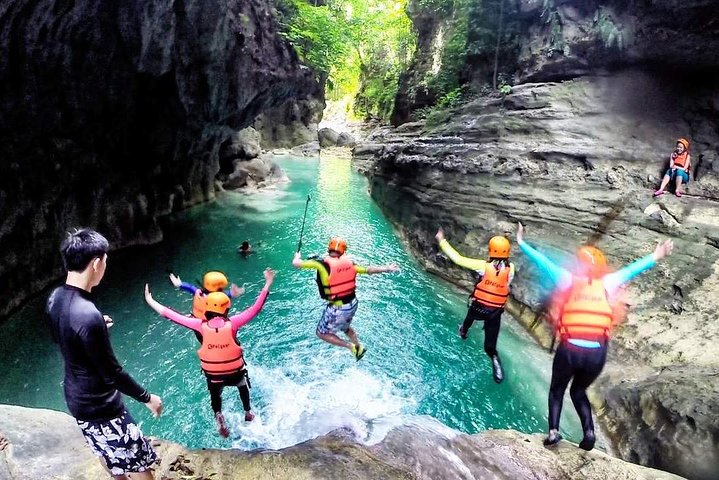
Kawasan Falls Canyoneering: Located near Moalboal, Kawasan Falls offers three tiers of waterfalls with jump-and-swim opportunities. April's water levels are perfect—high enough to be fun, not so high as to be dangerous. Tours run $25-35 per person and take 3-4 hours. Local guides are essential and included; they know exactly which jumps are safe and which rocks are slippery. This activity is brilliant if you're traveling solo or with a small group; several travelers on wondr are actively looking for companions to explore Cebu together, making group tours a natural meeting point.
Malapascua Island Diving: A 30-minute ferry north from Cebu City (₱300/$5.50, runs 8 AM and 3 PM), Malapascua is known for thresher shark encounters and pristine house reef diving. April visibility and calm seas make this particularly worthwhile. Dive operators charge $50-70 for two-tank dives; accommodation (homestays, beach bungalows) ranges from $20-40/night. Emma Rodriguez, an adventure diver on wondr, shared: "Malapascua in April was the best diving I've done in Southeast Asia. The thresher sharks appeared on three of my four dives—my April trip became the template for all future dive vacations."
Cebu City Heritage Walking Tour: Not all April time should be water-based. The Heritage of Cebu Monument (a national landmark depicting the city's Spanish colonial history), Basilica del Santo Niño (the oldest church in the Philippines, built 1565), and the Carbon Market (a chaotic, color-soaked local market) are all walkable from downtown. This area heats up considerably in April midday (32°C+), so explore 6-8 AM or after 5 PM. Entrance fees are minimal (₱50-100 for attractions); Carbon Market entry is free.
Find Travel Companions for Cebu
Traveling solo to Cebu in April doesn't mean traveling alone. Several travelers on wondr are actively looking for companions to explore Cebu together, whether that's joining a whale shark tour, splitting a private van to Moalboal, or sharing accommodation to reduce costs. April is actually prime companion-finding season—post-peak-season travelers tend to be solo adventurers rather than family groups, creating natural opportunities for group activities and shared accommodations.
On wondr, you can filter for travelers heading to Cebu in your specific dates and connect before you arrive. This isn't just about cost-splitting (though sharing a $40 van ride becomes $20 per person)—it's about having someone to share the moment when you're underwater with the sardine ball, or someone to laugh with when you get drenched jumping off Kawasan Falls.
Many wondr members traveling in April are divers, island hoppers, and budget explorers looking for exactly the experience that April in Cebu offers. Rachel Green, a group traveler on wondr, notes: "Finding dive buddies before arriving meant I had four amazing dives lined up and actual friends to grab dinner with afterward. April was already perfect weather-wise, but the community made it special."
[Find travel companions for Cebu](/find-companions/cebu) and browse others planning April trips. You can message potential companions, share interests, set budgets, and coordinate arrival times. Most connections happen 2-4 weeks before travel, giving you time to build real plans rather than day-of meetups.
Logistics: Flights, Transport, Visas, and Practical Details
Getting There: [Book flights to Cebu](/book/flights-to/cebu) from major Asian hubs. April flight prices are typically 15-25% cheaper than March. Expect $150-280 from Manila (1.5 hours), $200-350 from Bangkok (3.5 hours), $100-200 from Davao (1 hour). Mactan Cebu International Airport (airport code CEB) is 8 km east of downtown—a Grab taxi (app-based, like Uber) costs ₱200-280 ($3.60-5) to most hotels. Budget carriers like Cebu Pacific and AirAsia dominate routes; book 3-4 weeks ahead for the best rates.
Local Transport: Cebu City uses jeepneys (colorful public minibuses) for ₱8-15 per ride. Grab is available and transparent; most in-city rides cost ₱40-80. Ceres Bus operates long-distance routes to Moalboal, Oslob, and beyond (₱150-250 per journey). Renting a scooter (₱300-400/day, about $5-7) is viable if you have experience; traffic in Cebu City is aggressive but manageable outside peak hours.
Accommodation: April prices vary by area. Cebu City (business hub, city culture): $25-45/night for quality budget hotels. Moalboal (beach and diving focus): $20-55/night for beachfront. Malapascua Island (remote, divers' destination): $20-40/night for simple homestays. High-end options exist but work against budget travel principles—our focus is getting you incredible experiences without overpaying.
Visas: Most Western nationalities (USA, Canada, UK, EU, Australia, etc.) receive a 30-day tourist visa on arrival at CEB airport at no cost. Bring an onward ticket or proof of funds ($500-1,000 USD cash/cards is standard). Some countries require pre-arranged visas; check travel.gov.ph or your embassy's specific requirements.
Money Matters: ATMs are abundant in Cebu City (BDO, Metrobank, GCash). 7-Eleven stores offer cash advances on credit cards with reasonable fees. Most mid-range restaurants, hotels, and tour operators accept cards, but carry cash for local transport, markets, and smaller islands. Tipping is 10% for sit-down dining, 5% for casual service; it's appreciated but not obligatory.
Safety: Cebu is generally safe for tourists in common areas (Cebu City downtown, Moalboal, Malapascua). Standard precautions apply: avoid walking alone very late at night, don't flash expensive gear, and secure valuables. The dive and tour operator community is professional and tourist-friendly; they depend on repeat business and word-of-mouth, incentivizing good service.
When to Arrive and How Long to Stay
The best time to visit Cebu in April really does span the entire month, but strategy matters. Early April (1-10th): Still carries some peak-season pricing but offers the most reliable whale shark sightings and calmest diving conditions. Good if you're specifically targeting thresher sharks at Malapascua or want maximum activity reliability. Mid-April (11-20th): The sweet spot. Prices have dropped noticeably, crowds have thinned, weather remains pristine, and activity consistency is still excellent. This is when the best time to visit Cebu in April genuinely shines—you're getting 95% of the experience at 75% of March's cost. Late April (21-30th): Heat intensifies, but deals improve further. Whale shark tours and diving remain excellent. Some travelers report humidity climbing, but it's still far more pleasant than May-October. If you're ultra-budget focused or specifically traveling for diving (less affected by heat), late April works wonderfully.
How long should you stay? A logical minimum is 5-7 days: one day for Oslob whale sharks, two days diving and recovery, one day Kawasan Falls, one day Malapascua, one day exploring Cebu City or relaxing. Realistically, 10-14 days allows you to repeat favorite dives, extend your Malapascua stay, take a day trip to other islands like Bohol (famous for chocolate hills), and actually absorb the rhythm of the islands rather than racing through. Budget works like this: accommodation (10 nights at $30/night) = $300; food ($15-20/day) = $150-200; activities (whale shark $25, four dives $50 each, Kawasan $30, misc) = $250-300; transport = $50-100. Total: roughly $750-950 USD for 10 days, or $75-95 per day.
Michael Thompson, a budget traveler on wondr, shares: "I planned 7 days but extended to 14 because the costs were so reasonable and I wasn't ready to leave. April made that decision stress-free financially."
What to Pack and Essential April-Specific Tips
Packing for the best time to visit Cebu in April requires thinking about tropical sun, water activities, and social flexibility. Essentials: reef-safe sunscreen (SPF 50+; reef damage is real, and locals appreciate tourists using responsible products—brands like Stream2Sea or Naked & Famous are $15-20 but critical), a rash guard or lightweight long-sleeve swim shirt (₱300-500, or $5-9, prevents both sun and coral rash), underwater camera or GoPro (not essential but captures moments you'll replay forever), snorkel gear (bring your own if you're picky; rentals are $5-10/day), reef shoes or water booties ($15-25, protect feet from sharp coral and rocks).
Clothing: lightweight, breathable clothes (linen, merino, moisture-wicking synthetics); quick-dry shorts and dresses; two pairs of shoes max (one for city, one water shoe); minimal formal wear (Cebu's dining culture is relaxed; expensive restaurants aren't your budget target anyway). Toiletries: bring essentials—pharmacies carry basics, but your preferred brands might not exist. Deodorant, specific shampoos, and women's products are worth bringing, as availability and prices vary. Documents: photocopy your passport ID page and travel insurance details; store digitally in cloud storage too. Travel insurance is critical ($15-30 for 14 days) and often covers medical, evacuation, and trip cancellation.
April-Specific: A lightweight rain jacket or poncho (₱200-400, $3.60-7) handles occasional tropical showers. A wide-brimmed hat or visor (₱150-300) is more useful than you'd think—direct equatorial sun at sea level is intense. Electrolyte powder packets ($2-5 for a multi-pack) help you stay hydrated during active days. A dry bag ($10-20) protects electronics on boat and snorkel days.
Local Context: Filipinos dress modestly in non-beach contexts. Avoid swimwear or revealing clothes in markets, shops, or restaurants. Lightweight long pants or skirts and modest tops are appropriate and help with sun protection anyway. Religious sites (basilica, churches) require covered shoulders—a light scarf works. These aren't rigid rules, but respecting local norms makes interactions better.
💡 Quick Tips
- →Book whale shark tours the evening before through your hotel—direct morning bookings sometimes mean late pickups. Early arrival (7:30 AM on the water) dramatically improves your chances of multiple encounters.
- →Bring cash in small denominations (₱500 and ₱1,000 notes). Many boat operators and local guides don't have change for large bills, and ATMs aren't always accessible on islands.
- →Schedule diving for early days of your trip, not at the very end. If equalizing pressure causes any discomfort, you'll have recovery time before flying home.
- →Visit Carbon Market in Cebu City before 8 AM—it's a genuine local experience then, not a tourist spectacle. Bring a small daypack; it's crowded and pick-pocketing can happen.
- →Malapascua Island has limited accommodation and ferries run only twice daily. Book your room and island transport at least 3-5 days ahead, even in April when crowds are lower.
- →Drink bottled water exclusively (₱30-50 per 1.5L bottle at 7-Eleven). Tap water isn't filtered for tourists' systems, and illness ruins island time immediately.
- →The best restaurant deals are at local carinderias (hole-in-the-wall eateries) where a full meal costs ₱150-250 ($2.70-4.50). Locals eat here; quality is reliably good.
- →Download Grab, Google Maps (offline map of Cebu), and Google Translate offline before arriving—internet reliability varies on islands, and having navigation saved is critical.
Share this destination
Ready to visit Cebu?
See hotels, activities, and deals — or let AI build your full itinerary.