When you're planning a trip to Southeast Asia, one of the first questions that hits your inbox is this: how much does a trip to Siem Reap cost for 10 days? The good news? Siem Reap is one of the most affordable destinations in Asia, where your dollar stretches further than almost anywhere else in the world. Whether you're a budget backpacker eating $2 meals at night markets or a mid-range traveler staying in charming colonial guesthouses, Siem Reap accommodates every wallet. But here's what most travel blogs don't tell you: the answer depends entirely on your travel style. A 10-day Siem Reap adventure can cost you anywhere from $300 to $1,200, and there's genuinely excellent travel to be had at every price point. This guide breaks down exactly how much a trip to Siem Reap cost for 10 days based on real prices from 2024, real traveler experiences, and real strategies for stretching your money further while not missing the magic of Angkor Wat or the energy of Pub Street. Siem Reap isn't just the gateway to the world's largest religious monument—it's a living, breathing city with night markets that smell like lemongrass and fish sauce, floating villages where families have lived for generations, and some of the most delicious Khmer cuisine you'll ever taste. By the time we're done, you'll know exactly how much money to bring, where to spend it wisely, and where to splurge for experiences you'll never forget.
Breaking Down the Real Cost: Budget vs. Mid-Range vs. Comfort
Let's get straight to the numbers. When you ask how much does a trip to Siem Reap cost for 10 days, you're really asking which category you fall into.
Budget Traveler ($30-50/day): This is the dorm-bed, street-food lifestyle. You're looking at roughly $300–$500 for your entire 10 days. This includes everything: flights (booked with advance notice), accommodation in backpacker hostels like Mad Monkey or Tara Boat ($4–$8/night), meals primarily from night markets ($1–$3 per meal), and shared tours to Angkor Wat ($8–$12). Your temple pass costs $37 for a 3-day pass, which is non-negotiable—that's a fixed cost regardless of budget level.
Mid-Range Traveler ($50-100/day): This sweet spot is where most independent travelers land. You're staying in nice double rooms with air conditioning, eating at sit-down restaurants, and doing organized tours. Budget $500–$1,000 for 10 days. Hotels like Sala Lodges or Steung Siemreap run $25–$40/night. Meals jump to $5–$10 each, and you might book a private guide to Angkor Wat ($30–$50 per person, depending on group size).
Comfort Traveler ($100-150+/day): You're looking at 4-star hotels, restaurant meals with wine, private transportation, and curated experiences. Expect $1,000–$1,500+. Hotels like Shinta Mani or Tara Boat Boutique run $60–$100/night, meals are $10–$20, and private guides with air-conditioned transportation cost $50–$80 per day.
The truth? How much does a trip to Siem Reap cost for 10 days really comes down to these three variables: where you sleep, what you eat, and how you move around the temples. Everything else is surprisingly standardized.
Flights & Getting There: Your Biggest Single Expense
Let's talk about the elephant in the room—airfare. If you're flying from North America or Europe, getting to Siem Reap is often your largest single expense.
Realistic Flight Costs: - From the U.S. (typically routing through Bangkok or Vietnam): $400–$700 round-trip if booked 4–6 weeks in advance - From Europe: $550–$900 round-trip - From Australia or Asia: $150–$400 round-trip
Siem Reap International Airport (REP) is served by airlines like Thai Airways, Vietnam Airlines, Air Asia (a budget carrier from across Asia), and others. [Book flights to Siem Reap](/book/flights-to/siem-reap) at least 6 weeks before your travel dates to catch the sweet spot between availability and pricing.
Pro tip: If you're flexible with dates, flying mid-week (Tuesday–Thursday) is $50–$100 cheaper than weekends. Also, consider flying into Bangkok first—flights there are often cheaper, and a $15 connecting flight or 12-hour bus ride ($10–$20) to Siem Reap can actually save you money overall.
Once you land at Siem Reap International Airport, getting to your hotel is simple. A tuk-tuk (the three-wheeled taxis iconic to Cambodia) to the town center costs $3–$5 for solo travelers, or you can arrange hotel pickups ($8–$15) when you book. Some hotels include airport transfers—always ask.
Where to Stay: Neighborhoods & Real Hotel Prices
Your accommodation choice defines your 10-day Siem Reap experience. Unlike some destinations, Siem Reap's neighborhoods are genuinely different from each other.
Pub Street & Downtown: This is the backpacker epicenter—cheap, loud, energetic. Hostels here run $5–$12/night for dorms, $15–$25 for private doubles. The vibe is young, international, and heavy on drinking culture. Tara Boat Downtown is reliably good at $8/dorm, $20/private room.
Sivutha Boulevard: A quieter, more local feel just 10 minutes from Pub Street. Mid-range hotels like Steung Siemreap or Earthwalkers run $20–$40/night for clean, comfortable rooms. You're closer to actual Cambodian life here—better restaurants, less drunk tourists stumbling around at midnight.
The Artisans Angkor Area: Near the royal palace and markets, this zone has some boutique charm. Hotels like Shinta Mani ($70–$110/night) offer genuine luxury and cultural immersion.
[Find hotels in Siem Reap](/book/hotels-in/siem-reap) and filter by neighborhood. For a 10-day stay, negotiating a weekly discount is totally normal—mention you're staying 10 days, and many hotels will drop prices 10–20%. Emma Rodriguez, a mid-range traveler on wondr, swears by this: "I always ask for a discount after the first night. The worst they say is no, and I've saved $50–$100 on longer stays."
What you absolutely get in any decent hotel: hot water, WiFi (essential for staying in touch), air conditioning (non-negotiable in Cambodia's heat), and a fan. Don't cheap out so much that you're miserable; a $20/night room is the sweet spot for comfort without excess.
Temple Entry, Tours & Activities: The Core Experience
The reason you're coming to Siem Reap is Angkor Wat. Let's break down what that actually costs.
Angkor Archaeological Park Entry Pass: - 1-day pass: $37 - 3-day pass: $62 (best value for most travelers) - The pass is your ticket to all temples: Angkor Wat (the main attraction), Bayon Temple with its iconic smiling stone faces, Ta Prohm (the "Tomb Raider" temple with roots growing over ancient stones), Banteay Srei, and 50+ smaller temples across the park.
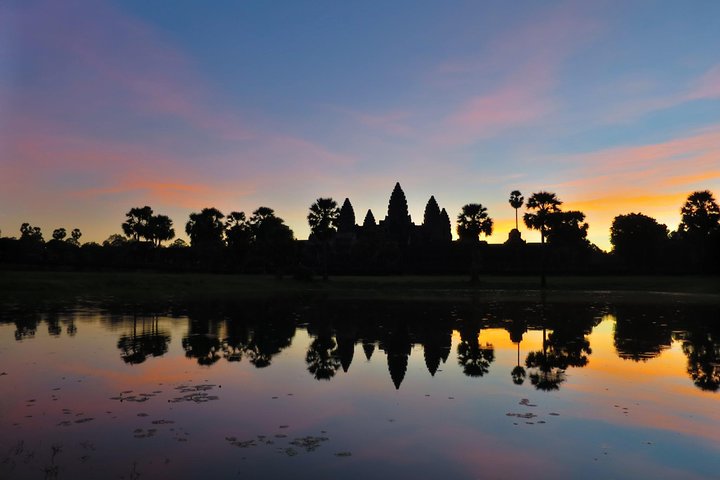
How much does a trip to Siem Reap cost for 10 days if you get the temple pass wrong? You could waste money. Most travelers do the 3-day pass ($62) and spend 2–3 full days exploring. One full day is sunrise at Angkor Wat itself (start at 5 a.m., watch the sun paint the temple golden), then spend the afternoon at Ta Prohm and other sites.
Guided Tours: - Shared group tours: $12–$20/person for sunrise tours, $15–$25 for full-day tours - Private guides: $30–$50/person in a small group, $60–$80/person solo
The shared tours are social and budget-friendly; private guides let you set your pace and ask deeper questions about Khmer history.
Other Activities: - Tonle Sap floating village tours: $15–$25/person (shared), $40–$70/person (private). These are genuine—you're seeing how families actually live on water. Some villages are less touristy than others; ask your guide or hotel for recommendations. - Night market walks + street food: $0 entry, $1–$3 per food item. This is essential Siem Reap culture. - Artisans Angkor craft workshops: $5–$15 to watch silk weaving or stone carving - Cooking classes: $15–$25 for half-day classes where you shop at local markets and cook Khmer food
James Chen, a thoughtful traveler on wondr, puts it this way: "Skip the pre-packaged tours and find a local guide through your hotel. You'll pay the same or less, support a real person, and get way better stories."
Food & Dining: Where to Eat Like a Local Without Breaking the Bank
Here's the secret about Siem Reap: the food is exceptional, and it's almost impossible to spend a lot of money eating well. This is where your budget stretches furthest.
Street Food & Night Markets: This is where 80% of locals eat. A plate of chicken and rice from a night market stall costs $1–$1.50. A fresh spring roll is $0.50. A cup of fresh sugar cane juice is $0.75. The night market near the Old Market (Phsar Chaa) is sensory overload in the best way—the smells, the chop of cleavers, families gathering for dinner. It's free to walk through, and you'll eat better here than in many restaurants.
Local Sit-Down Restaurants: Places like Chanrey Tree (traditional Khmer in a wooden house, mains $4–$6), Malee's Restaurant (street food elevated, $3–$8 per dish), or any restaurant where you see more Cambodians than tourists is $3–$10 per person for a full meal including drinks.
Mid-Range Restaurants: Places like Thaicafe or Viroth's Restaurant offer excellent quality in nice settings, $8–$15 per person.
Fine Dining: If you want to splurge, restaurants like Cuisine Wat Damnak (farm-to-table Khmer fine dining) run $20–$40 per person. It's genuinely worth it—some of the best food in Southeast Asia.
Your 10-Day Food Budget: - Budget level: $10–$15 total (mostly street food) - Mid-range: $50–$100 total (mix of restaurants and street food) - Comfort level: $100–$150+ total
Cultural note: Cambodian food is built on three flavors—salty, sour, and spicy. Fish sauce is in everything. If you're adventurous, you'll thrive here. Always eat where it's hot (literally—hot food in hot places is safe). Stay hydrated; drink only bottled water (widely available, $0.50–$1 per large bottle). Avoid ice unless it's from a reputable restaurant.
Find Travel Companions for Siem Reap
One of the best ways to reduce costs—and maximize fun—is to travel with others. Several travelers on wondr are actively looking for companions to explore Siem Reap together. When you split guide costs, private transportation, and even accommodation (many hostels have multi-bed options or you can share a double room), your daily expenses drop immediately.
On wondr, you can connect with travelers heading to Siem Reap at the same time, whether you're interested in temple exploration, nightlife on Pub Street, or slower travel. Yuki Tanaka, a city-break traveler on wondr, shares: "I found a group of three other travelers through wondr heading to Siem Reap the same week. We split a private guide for three days, negotiated a better rate, and ended up with personalized attention for less money than the group tours. Plus, I made genuine friends."
Splitting a private guide ($60–$80/person solo becomes $30–$40/person in a group of 3) or a private tuk-tuk for the day ($40–$50 total, split 3–4 ways) adds up. [Find travel companions for Siem Reap](/find-companions/siem-reap) on wondr and connect with people who match your travel style, dates, and interests. The platform helps you coordinate flights, hotel neighborhoods, and activities before you even arrive.
Hostels like Mad Monkey or Tara Boat also organize group activities and tours at discounted rates—staying in a social hostel is essentially "finding companions" while securing cheaper accommodation.
Transportation Around Town & Practical Logistics
Getting around Siem Reap is straightforward and dirt cheap. Understanding this saves money and confusion.
Tuk-Tuks (Three-Wheeled Taxis): - $1–$2 for any trip within town - $3–$5 to temples or further afield - Always negotiate the price before getting in (drivers won't use meters) - Tuk-tuks are the iconic transport—you'll see, hear, and feel authentic Cambodia from the back of one
Motorbike Taxis: - $0.50–$1 for in-town trips - Faster than tuk-tuks but less comfortable; wear a helmet
Renting a Motorbike/Scooter: - $5–$8/day if you're confident riding - License requirements are nominal; locals don't check much. That said, helmet laws are enforced more now
Private Driver for Day Trips: - $25–$40/day to hire a driver + motorbike taxi to temples - $50–$70/day for a car with driver
Visa & Currency: US citizens, Australians, and most Western nationalities can get a tourist e-visa online before arriving ($25–$35 via official sites like evisa.gov.kh) or at the airport on arrival ($30). The currency is the Cambodian Riel (1 USD ≈ 4,000 Riel), but USD is accepted everywhere. Withdraw USD from ATMs ($2–$3 fee per withdrawal) and exchange in town for better rates if you need Riel.
Safety & Practical Tips: - Siem Reap is generally safe. Petty theft happens on Pub Street (keep valuables secure). Check the U.S. State Department travel advisory for current guidance. - Street crossings are chaotic—look both ways multiple times - Haggling is normal for tuk-tuks and markets; always be respectful - Learn a few Khmer phrases ("Hello" = "Sua sdei"; "Thank you" = "Orkun") - Dress modestly at temples (shoulders and knees covered) - Drink only bottled water; ice in drinks is generally safe at tourist-oriented places but risky elsewhere
Michael Thompson, an experienced traveler on wondr, recommends: "Download a SIM card ($5–$10 for data) on arrival. Cellcard and Smart are the main providers. Local SIM cards give you independence and emergency access without roaming charges—totally worth it on a 10-day trip."
💡 Quick Tips
- →Book your temple pass 3-day option for $62 instead of three single days ($37 × 3 = $111). You'll save $49 and have flexibility to explore at your own pace.
- →Eat 90% of your meals at night markets and local stalls. You'll spend $1–$3 per meal, eat authentic Khmer food, and support actual Cambodian families running food businesses.
- →Negotiate hotel rates after the first night if staying 7+ days. Most family-run guesthouses will offer 10–20% discounts; chains won't, so choose wisely.
- →Hire a private guide through your hotel rather than booking tours online. Prices are the same or cheaper, and guides recommend restaurants and activities based on your interests.
- →Visit Angkor Wat at sunrise (5 a.m. start) to avoid crowds. You'll see better light for photos and experience genuine magic before 10,000 tourists arrive.
- →Get a local SIM card ($5–$10) instead of international roaming. You'll cut communication costs dramatically and have GPS access for navigating by tuk-tuk.
- →Tonle Sap floating village tours are worth it, but skip the mainstream operators—ask your hotel for alternatives where your money supports families directly.
- →Plan your trip for November–March (cool season). Going June–September saves 30% on accommodation but is hot, humid, and rainy; travel becomes harder and less enjoyable.
Share this destination
Ready to visit Siem Reap?
See hotels, activities, and deals — or let AI build your full itinerary.