
The question 'is Tokyo safe for solo female travelers?' comes up constantly in travel forums, and the answer is a resounding yes. Tokyo consistently ranks among the safest cities globally, with virtually no violent crime, excellent public transportation, and a culture of respect that extends to solo travelers of all genders. But safety isn't just about statistics — it's about feeling confident, prepared, and empowered as you navigate a new city. After speaking with dozens of solo female travelers who've explored Tokyo, interviewing locals, and researching safety data extensively, we've put together this comprehensive guide to answer your concerns directly. Whether you're worried about getting lost in the bustling Shibuya crowds, navigating the nightlife scene, or understanding local customs, we'll walk you through everything you need to know. Tokyo's reputation for safety combined with its world-class culture, food scene, and hospitality makes it an ideal destination for solo female travelers seeking an unforgettable urban adventure.
Is Tokyo Actually Safe for Solo Female Travelers? The Real Stats
Let's address the core question head-on: is Tokyo safe for solo female travelers? According to the official Japan tourism board, Tokyo has one of the lowest crime rates of any major metropolitan area globally. The Economist's Safe Cities Index consistently ranks Tokyo in the top 3 safest cities worldwide, and violent crime against tourists — particularly women — is exceptionally rare.
Rachel Green, a culture-focused traveler on wondr, puts it perfectly: "I felt safer walking alone at midnight in Shibuya than I do in most major Western cities. The police presence is visible but unobtrusive, and locals are genuinely helpful if you look lost."
According to 2023 data, Tokyo's crime rate is approximately 1.2 incidents per 1,000 people — significantly lower than New York City (4.2) or London (3.8). Pickpocketing does occur in crowded areas like train stations during rush hour, but it's far less common than in European cities. Sexual harassment is not normalized; groping on trains is taken seriously, and many lines have women-only cars during peak hours. Theft from hotel rooms is virtually unheard of, and leaving belongings unattended in a café is generally safe — though we wouldn't recommend it.
That said, safety isn't just about crime statistics. It's about infrastructure, community norms, and how prepared you are. Tokyo excels in all three areas. The city has impeccable public transportation, helpful locals (even if they don't speak English), strong police presence in tourist areas, and a cultural norm of respect and orderliness. Unlike some destinations that require constant hypervigilance, Tokyo allows you to relax and actually enjoy your travel experience.
Best Neighborhoods for Solo Female Travelers in Tokyo
Your choice of neighborhood dramatically impacts your solo travel experience. Here are the safest, most welcoming areas for female travelers:
Shibuya & Harajuku: These iconic neighborhoods are extremely safe and energetic, though crowded. The famous Shibuya Crossing — the world's busiest — is fascinating to experience. Harajuku's Takeshita Street offers quirky fashion and great people-watching. Both areas are well-lit, heavily patrolled, and filled with tourists and locals alike. Budget for drinks at $8-15 USD per cocktail and meals at $6-12 USD per entree.
Shinjuku: Tokyo's entertainment district is massive, vibrant, and remarkably safe despite its reputation. The neon-lit streets, Robot Restaurant (a must-see digital art experience), and countless izakayas (Japanese pubs) create an exciting atmosphere. It's busier and rougher around the edges than Shibuya, but still entirely safe for solo female travelers. Stick to well-lit main streets in the evening.
Ginza: Tokyo's most upscale neighborhood offers luxury shopping, fine dining, and sophisticated vibes. It's exceptionally safe and perfect if you prefer a more refined atmosphere. Expect higher prices: dinner at $20-50 USD per person, though street-level options are cheaper.
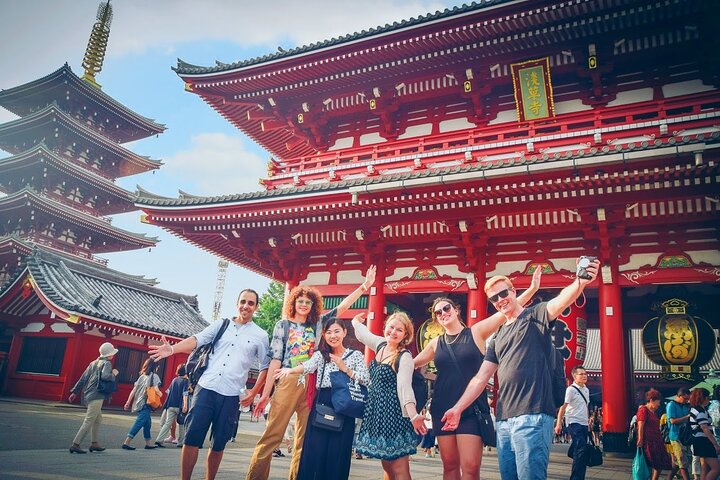
Asakusa: Home to the magnificent Senso-ji Temple, Asakusa maintains a traditional, neighborhood feel while remaining extremely safe. The evening streets are quieter than Shibuya but still well-populated. Nakamise shopping street is lively and perfect for solo exploration. Meals here are affordable: $5-10 USD for excellent ramen or tempura.
Roppongi: This nightlife hub is safe but caters more to expats and party-seekers. Emma Rodriguez, an adventure traveler on wondr, notes: "Roppongi gets a reputation for being sketchy, but honestly, it's just rowdy. Stick to the main streets and you'll be fine. The nightlife is genuinely fun if that's what you're after."
Avoid after dark: While Tokyo is safe overall, a few areas are better avoided late at night by solo travelers — notably parts of Kabukicho (Shinjuku's red light district) and isolated residential streets far from stations. Stick to areas with foot traffic, lights, and clear signage.
Practical Safety Tips for Solo Female Travelers in Tokyo
Beyond choosing safe neighborhoods, these practical strategies will help you feel confident:
Use the excellent public transportation system: Tokyo's trains and buses are incredibly safe, reliable, and clean. Nearly all signs have English translations. Women-only cars run on all major lines during peak hours (usually 7-10 AM and 5-8 PM). A Suica or Pasmo card ($8 USD initial charge, then pay-as-you-go at $0.70-2.50 USD per trip) makes navigation seamless. Solo female travelers report that public transport is genuinely the safest way to get around.
Keep your phone charged and download offline maps: Google Maps works perfectly in Tokyo and includes train schedules. Download the Google Maps or Maps.me app offline to your phone before arrival. This eliminates the "lost tourist" vulnerability that attracts bad actors in some cities.
Learn basic Japanese phrases: "Sumimasen" (excuse me), "arigatou gozaimasu" (thank you very much), and "eigo o hanasemasu ka?" (do you speak English?) go a long way. Locals appreciate the effort and are more likely to help. Most signs in tourist areas have English, but venturing into residential neighborhoods becomes easier with a phrasebook app.
Avoid excessive solo drinking late at night: While it's perfectly safe to enjoy sake or cocktails, excessive alcohol consumption (which lowers vigilance anywhere) is worth moderating. If you want nightlife, explore with other travelers. Right now, 38 travelers on wondr are looking for companions to explore Tokyo together — consider connecting with someone for evenings out.
Dress respectfully, not flashily: This is less about safety and more about fitting in. Avoid wearing expensive jewelry, designer bags (unless truly committed to luxury travel), or revealing clothing. Japanese culture values modesty, and dressing down helps you blend in and avoid standing out as a wealthy tourist target.
Register with your embassy: The U.S. State Department (travel.state.gov) recommends registering with your nearest embassy. For citizens of other countries, check your government's travel advice pages. This takes 5 minutes and ensures your government can contact you in emergencies.
Trust your instincts, but don't assume danger: Tokyo's safety can feel almost *too* good — you might let your guard down. That's generally fine, but if something feels wrong (a person following you, an unsafe situation), trust that feeling and move to a well-populated area or police box.
Transportation & Getting Around Safely
Tokyo's public transportation is the safest, cheapest, and most efficient way to navigate the city. Here's what you need to know:
Trains & the Yamanote Line: The Yamanote Line is a circular train connecting all major neighborhoods. It's perfect for solo exploration because you literally can't get lost — just stay on the loop until you reach your destination. Trains run every 2-4 minutes, are immaculately clean, and feature safety cameras. A 24-hour pass costs $8 USD.
Taxis: Safe but expensive. A 1-mile ride costs $5-8 USD depending on traffic. Drivers don't expect tips and most don't speak English, but addresses in your phone work fine. Grab or Uber operate in Tokyo but are pricier than taxis. For safety, stick to official taxis (white glove service, official markings) rather than unmarked cars.
Pedestrian-friendly culture: Tokyo has an almost religious respect for traffic laws. Even when no cars are coming, locals wait for green lights. This means streets are predictable and safe to navigate.
Late-night transportation: Most trains stop running around midnight, but night buses operate major routes. If you're out past midnight, your options are night buses or taxis. The earlier you return to your accommodation, the more transportation options you'll have.
When booking your arrival, [Book flights to Tokyo](/book/flights-to/tokyo) through wondr, which compares prices and schedules. From Narita Airport (60km east), the Narita Express train takes 60 minutes to central Tokyo and costs $13 USD — significantly safer and cheaper than taxis ($30-50 USD).
Accommodation: Choosing Safe Hotels & Hostels in Tokyo
Where you sleep dramatically impacts your sense of security and budget. Tokyo offers excellent options across all price points:
Hotels: Budget mid-range chains like Hotel Gracery (from $50-80 USD/night), APA Hotel (from $40-70 USD/night), and Richmond Hotel (from $60-100 USD/night) offer excellent value with keycard access, 24-hour front desk, and security cameras. All are perfectly safe for solo travelers. Upscale areas like Ginza, Shibuya, and Roppongi have hotel concentrations; these are tourist-focused and inherently safer than random residential neighborhoods.
Hostels: Tokyo has excellent hostels with dedicated female dorms. Khaosan Tokyo Kabuki ($20-30 USD/night) and Nui Hostel ($25-35 USD/night) are reputable chains where solo female travelers commonly stay. Hostels offer built-in community, making them ideal if you want companionship without fully committing to a tour. Sarah Mitchell, an adventure traveler on wondr, shares: "I stayed in a female dorm at a hostel in Shinjuku for my first three nights, made friends with other solo travelers, and then explored independently. Best of both worlds."
Airbnb: Thousands of private rooms and apartments operate in Tokyo. Check reviews carefully, prioritize recently-reviewed properties with female reviews, and avoid entire private apartments if you're uncomfortable being alone. A private room with ensuite bathroom costs $35-60 USD/night in mid-range neighborhoods.
Safety features to prioritize: Ensure your accommodation has a 24-hour reception/security, keycard access (not shared doors), secure lockers, good reviews mentioning safety, and ideally a female host or staff member. Avoid accommodations in very isolated areas or with poor reviews mentioning security.
When booking, [Find hotels in Tokyo](/book/hotels-in/tokyo) to compare safety ratings, neighborhood locations, and solo traveler reviews. Always read recent reviews from other female travelers before booking.
Best Activities & Experiences for Solo Female Travelers
Now that we've covered safety, let's talk about what makes Tokyo amazing:
Shibuya Crossing & Harajuku: Experience the world's busiest intersection and explore the eccentric fashion of Takeshita Street. Best visited early morning (7-8 AM) before crowds, or at night when it's spectacularly lit. Both areas are extremely safe and packed with solo travelers. Budget $0 (free viewing of crossing) to $5-10 USD for casual meals.
TeamLab Borderless Digital Art Museum: This immersive digital art experience ($33 USD entry, book online in advance) is mind-bending and perfect for solo exploration. You'll spend 2-3 hours in crystalline rooms of flowing light and color. It's sophisticated, safe, and genuinely magical. Located in Odaiba, an artificial island with excellent modern infrastructure.
Tsukiji Outer Market & Sushi Breakfast: Wake up early and head to this iconic market for the freshest sushi breakfast you'll ever eat. Sit at a counter, watch skilled chefs work, and enjoy incredibly fresh omakase (chef's selection) for $15-25 USD. It's a sensory experience and completely welcoming to solo diners. The market is at its best 6-9 AM.
Cherry Blossom Season (March-May): If traveling during spring, hanami (cherry blossom) season is magical. Ueno Park becomes a festival of pink blossoms, sake, and celebration. Visit early morning to avoid crowds, or at dusk when the blossoms are lit and locals gather. It's breathtaking and entirely safe.
Mount Fuji Day Trip: A day trip to Mount Fuji from Tokyo is feasible and spectacular. Take the train to Hakone or Kawaguchiko (90 minutes, $10-15 USD). You can hike a portion, visit the crater, or just admire the iconic silhouette. Solo female travelers regularly do this independently; stick to marked trails and go early to avoid hiking in darkness.
Senso-ji Temple & Asakusa: Tokyo's oldest temple is magnificent, especially at dusk when crowds thin. The nearby shopping street Nakamise offers unique souvenirs. Stay for dinner at a traditional izakaya. The entire neighborhood is safe and feels authentically Tokyo.
Nightlife & Karaoke: Karaoke is quintessentially Japanese and genuinely fun solo or in groups. A private karaoke room costs $15-30 USD/hour, and you can rent one alone or join others. It's a uniquely safe way to experience Tokyo's nightlife culture. James Chen, a city-break traveler on wondr, says: "Solo karaoke in Tokyo changed my life. I felt zero pressure, just pure joy singing badly in a private room. Do it."
Find Travel Companions for Tokyo
While Tokyo is remarkably safe for solo travel, many female travelers prefer having a companion for at least part of their trip — whether for cost-sharing (especially accommodation), shared experiences, or simply social connection. Right now, 38 travelers on wondr are looking for companions to explore Tokyo together.
Connecting with other travelers planning Tokyo trips offers several benefits: split hotel or Airbnb costs (reducing nightly accommodation from $60 USD to $30 USD), shared transportation costs, having someone to experience iconic moments like Shibuya Crossing or teamLab together, and genuine friendship (many travelers maintain friendships made on the road).
Wondr's companion-finder tool matches you based on travel dates, interests, budget, and travel style. Whether you're a culture lover seeking temple visits and food experiences, an adventure traveler wanting to hike Mount Fuji, or a nightlife enthusiast exploring Roppongi's clubs, you'll find like-minded travelers planning Tokyo trips right now.
[Find travel companions for Tokyo](/find-companions/tokyo) on wondr. Simply create a free profile, indicate your Tokyo dates and interests, and browse other travelers heading there. Many conversations start here and turn into lasting travel partnerships. You'll maintain all safety and autonomy — wondr simply facilitates connections. Many female travelers find that having a companion for their Tokyo trip (even if just for part of it) enhances the experience without compromising the independence and self-discovery that makes solo travel transformative.
Practical Logistics: Visas, Currency, and Essential Information
Before you go, handle these essentials:
Visas: Most Western passport holders (US, Canada, UK, Australia, EU citizens) receive 90-day visa-free entry to Japan. No advance visa required. Simply show your passport on arrival. Check the official Japan tourism board for your specific citizenship. If you're from a country requiring a visa, apply through your nearest Japanese embassy.
Currency: Japan is still largely cash-based. The Japanese Yen (JPY) typically trades around 110-150 per 1 USD depending on market conditions. Budget approximately $40-60 USD/day for accommodation in mid-range areas, $20-30 USD/day for meals (street food and casual restaurants), and $10-15 USD/day for activities and transport. Total daily budget: $70-105 USD for a comfortable mid-range trip.
Money & ATMs: Withdraw cash from 7-Eleven ATMs (they accept foreign cards) or major banks. No-fee withdrawals are common. Credit cards work in hotels and department stores but rarely in restaurants, markets, or small shops. Bring a mix of cash and cards.
SIM Card & Internet: Buy a prepaid SIM card at the airport ($5-15 USD, includes 3-5GB data). Brands like SoftBank and au are reliable. Alternatively, rent a pocket WiFi device ($3-5 USD/day). Both ensure you can navigate maps, translate menus, and stay in touch with home.
Language: English is spoken in tourist areas and by younger Japanese people, but not universally. Download Google Translate (offline mode available) and a kanji reader app. Learning even 5-10 Japanese phrases dramatically improves your experience and locals' willingness to help.
Best time to visit: October-November (autumn) and March-May (spring) offer perfect weather (60-75°F), fewer crowds than summer, and spring includes cherry blossom season. Summer (July-August) is hot, humid, and crowded. Winter (December-February) is chilly but clear and festive.
[Plan your Tokyo trip](/plan?destination=Tokyo) using wondr's AI-powered itinerary builder, which customizes recommendations based on your dates, interests, and budget. The platform will help you sequence activities logically, account for travel times between neighborhoods, and identify hidden gems beyond the tourist circuit.
💡 Quick Tips
- →Download Google Maps offline before arrival and enable location services to navigate confidently without data consumption.
- →Purchase a Suica/Pasmo card at the airport ($8 USD) for seamless train and bus travel — it's faster than buying individual tickets and works nationwide.
- →Visit Tsukiji Outer Market between 6-8 AM for the freshest sushi breakfast and smallest crowds; arrive later and stalls close or become congested.
- →Stay in neighborhoods connected by major train lines (Shibuya, Shinjuku, Asakusa, Ginza) to maximize safe, efficient transportation options.
- →Keep a printed hotel business card with your accommodation's address in Japanese — show it to taxi drivers or locals if you need directions.
- →Visit temples and gardens at opening time (usually 6-8 AM) to experience them peacefully before tour groups arrive.
- →Never leave valuables unattended, but feel confident leaving a jacket or phone at a table in a busy café — theft is genuinely rare.
- →If you feel unsafe anywhere (exceedingly unlikely), police boxes are on every block; the distinctive red booths have English-speaking officers on staff.
Share this destination
Ready to visit Tokyo?
See hotels, activities, and deals — or let AI build your full itinerary.
Top things to do in Tokyo


Compare Destinations