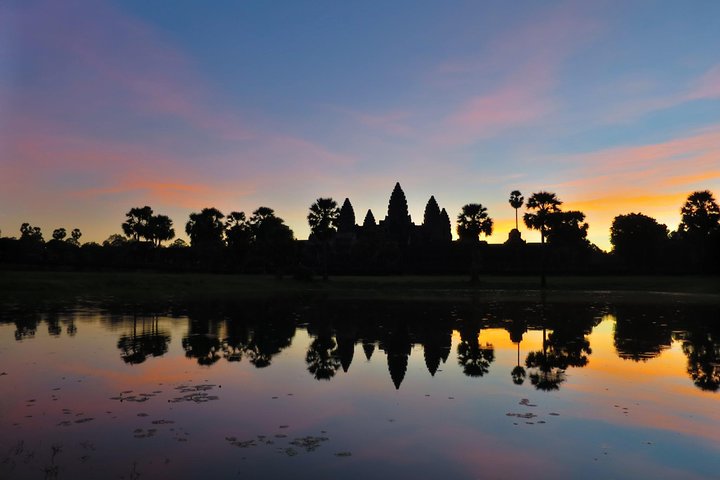
November is when Siem Reap hits its stride—and travelers are finally catching on. Following months of sweltering heat and relentless monsoons, Cambodia's most iconic destination emerges refreshed and ready to dazzle. The weather shifts dramatically: crisp mornings (around 75°F/24°C), barely-there humidity, and rain that's practically a memory. This is peak season for a reason—Angkor Wat's temples glow in honeyed sunrise light, the Tonle Sap Lake reaches its fullest, and locals celebrate the harvest with festivals that pulse through the city. Here's the insider's edge: November slots perfectly in that sweet spot before December's crowds arrive and premium prices take hold. In this guide, we'll show you what makes November the month to visit, how to explore like a pro, and how to see the temples, street food stalls, and floating villages without overextending your budget. Whether you're camping out for that legendary Angkor Wat sunrise or hunting down the best bites at Pub Street's night market, November is genuinely your moment.
Why November Is the Best Time to Visit Siem Reap
The best time to visit Siem Reap in November comes down to three magic ingredients: weather, crowds, and price. Let's break each down.
Weather is the headline story. November marks the transition from Cambodia's monsoon season to the cool, dry season that lasts through February. You'll experience mornings crisp enough to wear a light jacket (rare in Cambodia), with temperatures climbing to a comfortable 82–86°F (28–30°C) by midday—hot, yes, but nothing like the 95°F+ swelter of April or May. Humidity drops significantly, meaning your hair won't frizz, your camera lens won't fog, and you'll actually enjoy walking around temples instead of melting into the ground.
Rain is virtually non-existent. During our research, we found that November averages just 0.8 inches of rainfall—practically a guarantee of clear skies. This matters enormously for photographers and sunrise chasers. The best time to visit Siem Reap in November is precisely because you can reliably plan outdoor activities without weather cancellations.
Crowds are manageable compared to December and January, when tour groups descend en masse. You'll still encounter other visitors at Angkor Wat—it's UNESCO World Heritage, after all—but you'll avoid the suffocating peak-season queues. Sunrise at the temple complex typically draws 200–400 people in November versus 600+ in December.
Pricing rewards early planners. Hotels cost 20–30% less than peak season rates. A decent mid-range hotel (three stars) runs $35–50/night in November versus $50–75 in December. Guesthouses drop from $15–20 to $12–18. Tour prices remain stable, but fewer tourists mean tour operators compete harder for bookings—you might negotiate better rates for multi-day Angkor passes or floating village tours.
Emma Rodriguez, a budget traveler on wondr, notes: 'November is when you get the best-of-both-worlds season—amazing weather without paying December prices. I stayed in a lovely guesthouse near Sivutha Boulevard for $14/night and had guides competing to give me the best rate for temple tours.'
Weather and What to Pack for November in Siem Reap
Understanding November's climate is essential for packing smartly and planning your days around the weather.
Temperature and Humidity: November averages 78–88°F (26–31°C) during the day, dropping to 65–70°F (18–21°C) at night. Humidity ranges from 55–70%—noticeably lower than other months. Expect brilliant sunshine and impossibly clear blue skies. The transition from monsoon to dry season means the air quality improves dramatically; visibility for photography is exceptional.
What to Pack: Bring lightweight, breathable clothing (cotton and linen are your friends), comfortable walking shoes broken in before you arrive, and a lightweight rain jacket or poncho just in case—November still catches the tail end of occasional showers. A wide-brimmed hat is non-negotiable; sun exposure at the temples is intense. Sunscreen (SPF 50+) is essential and cheaper to buy at home. Layers matter for early mornings at Angkor Wat and air-conditioned restaurants at night. Comfortable sandals for temple visits (you'll remove shoes inside many buildings) and swimwear if you plan to visit Tonle Sap floating villages.
Sunrise and Sunset Timing: In November, sunrise occurs around 5:50–6:00 AM and sunset around 5:30–5:45 PM. This shapes your daily itinerary. Most visitors wake at 4:30 AM to catch sunrise at Angkor Wat, returning by 10 AM when heat peaks. Afternoons suit exploring Siem Reap town, the Night Market, or resting at your hotel. Evening activities resume around 4:30 PM.
Rachel Green, a general traveler on wondr, shares: 'I packed way too much heavy clothing for November. The layering advice was spot-on—I wore a thin cardigan for sunrise, ditched it by 7 AM, and grabbed it again after sunset. The days are long and you're walking constantly, so comfort is everything.'
Getting to Siem Reap: Flights, Visas, and Logistics
Getting to Siem Reap is straightforward, with direct flights from most major Asian hubs and increasingly from North America and Europe.
Flights: Siem Reap International Airport (REP) is the gateway. [Book flights to Siem Reap](/book/flights-to/siem-reap) from Bangkok's Suvarnabhumi (BKK)—a 1-hour flight costing $40–80 one-way, usually the cheapest option. From Phnom Penh (PNH), it's a 45-minute flight ($30–60). From Hanoi or Ho Chi Minh City, expect 2–3 hours and $60–120. Long-haul travelers from North America typically route through Bangkok, adding 6–8 hours to your journey.
November is not peak airfare season like December, so booking 4–6 weeks in advance yields reasonable fares. Budget carriers like AirAsia and Cambodian-operated Lanmei Airways offer cheapest tickets; full-service carriers like Thai Airways or Vietnam Airlines cost more but include meals and baggage.
Visas: Most nationalities require a tourist visa (T) or business visa (E). E-visas are processed online at evisa.gov.kh ($25, valid 90 days, approved within 3 days). Processing is straightforward. You'll need a passport valid 6+ months and a digital photo. Alternatively, tourist visas on arrival cost $30–35 and can be obtained at the airport (expect lines). Citizens of ASEAN countries, Japan, South Korea, and a few others enjoy visa-free entry up to 30 days.
Currency: Cambodia's currency is the Cambodian Riel (KHR), but USD is widely accepted—in fact, preferred. Exchange rates hover around 4,050 KHR to $1 USD. Withdraw cash at ATMs in Siem Reap (abundant near Pub Street and at the airport). Notify your bank of travel dates to avoid transaction blocks. Credit cards work at upscale hotels and restaurants but carry 3–5% surcharges; carry cash for markets, budget guesthouses, and street food.
Getting into Town: From the airport (6 km north of town), hire a tuk-tuk ($5–8, negotiate beforehand) or book a shared minibus through your hotel ($3–5). Official taxi stands exist but cost $12–15. Don't use ride-sharing apps; they're unreliable outside Phnom Penh.
James Chen, a general traveler on wondr, advises: 'Grab cash at the airport ATM as soon as you land. The exchange rate is fair, and you'll want USD for tuk-tuks and tips. I made the mistake of relying on credit cards early on and paid surcharges on everything.'
Best Things to Do: Temples, Markets, and Villages
Siem Reap revolves around the temples of Angkor, but the city itself—and the Tonle Sap Lake region—offer rich experiences. Here's how to structure your days.
Angkor Wat and the Temple Complex: No visit to Siem Reap is complete without Angkor Wat, the world's largest religious monument. A 3-day pass ($62) allows unlimited temple access; most visitors budget 2–3 days exploring the main temples. Day one typically focuses on sunrise at Angkor Wat itself (arrive by 5:30 AM; the temple glows orange as the sun rises), then Bayon Temple with its 216 smiling stone faces carved into towers, and Ta Prohm—the "Tomb Raider temple" where roots entwine ancient stones. Days two and three venture to lesser-known temples like Banteay Srei (the "Citadel of Women," famous for exquisite pink sandstone carvings) and Preah Khan.
Hire a tuk-tuk driver for $12–15/day or join a guided tour ($25–40/person for small groups). Guides are invaluable; they explain the Khmer architecture, Hindu-Buddhist iconography, and history in ways guidebooks can't. Hire at your hotel or through platforms like wondr, where several travelers are actively looking for companions to explore Siem Reap together—consider sharing a guide to reduce costs.
Pub Street and the Night Market: After temples, Siem Reap's nightlife hub is Pub Street (actually a laneway off Street 8), packed with backpacker bars, restaurants, and a genuine Cambodian night market. Street food dominates: grilled squid ($2), amok (Khmer curry steamed in banana leaf, $3), and sugar cane juice freshly pressed ($1). The night market operates every evening; arrive after 6 PM. Nearby, the Old Market (Psar Chas) operates during the day; it's authentic and chaotic, perfect for souvenirs, textiles, and observing daily Khmer life.
Tonle Sap Floating Villages: A 30-minute tuk-tuk ride from town ($8 round-trip), these villages sit on the Tonle Sap Lake—the world's largest seasonally-variable lake. November is ideal; the water is high (it drops dramatically in dry season), fishing is active, and the villages teem with activity. Kompong Phluk floating village ($25–35/person for 2-hour boat tours) is less touristy than Kompong Khleang; you'll see stilt houses, floating schools, and fishing nets in action. Respectfully photograph; these are real homes, not tourist attractions. Avoid tours that visit crocodile farms or wildlife markets.
Artisans Angkor and Local Craft Workshops: For a slower experience, visit Artisans Angkor (near Angkor Park entrance), a social enterprise training local artisans in traditional Khmer crafts. Watch silk weavers, stone carvers, and sculptors at work. Purchases support the community directly.
Marcus Johnson, a general traveler on wondr, reflects: 'I expected the temples to be the highlight—and they were—but the night market on Pub Street became my favorite evening ritual. The amok is genuinely delicious, prices are unbeatable, and the mix of locals and travelers created this fun atmosphere. I went back three nights.'
Where to Stay and How Much to Budget
Siem Reap accommodates every budget. The best time to visit Siem Reap in November means you'll secure great value across the board.
Budget Guesthouses ($10–20/night): The backpacker quarter around Pub Street and Street 9 is packed with guesthouses. Mad Monkey (Street 8, $12–16) offers dorm beds and private rooms with communal vibes—great for meeting other travelers. Okay Guesthouse ($14–18) and Siem Reap Backpackers ($11–15) are clean, friendly alternatives. These places include WiFi and often serve breakfast. Some have rooftop bars, perfect for sunset drinks and connecting with other travelers.
Mid-Range Hotels ($30–60/night): Sokhem Boutique Hotel (Sivutha Boulevard, $40–50) offers air-conditioning, WiFi, hot water, and helpful staff. Shinta Mani Siem Reap ($35–45) combines comfort with social responsibility (it's a training hotel). For this price range, expect private rooms, ensuite bathrooms, and daily housekeeping. [Find hotels in Siem Reap](/book/hotels-in/siem-reap) to compare; rates drop 20–30% compared to peak season.
Upscale Options ($80–150+/night): Park Hyatt Siem Reap or Raffles Grand Hotel d'Angkor offer luxury; splurge here if you want pampering after temple days, though it contradicts the budget-traveler ethos.
Budget Breakdown (Daily): Accommodation ($15–35), food ($8–12), temple pass ($20 for 1-day, $40 for 3-day spread across days), tuk-tuk ($5–8), activities ($20–30 for boat tours). A comfortable budget-traveler day costs $70–90 excluding flights. November rates mean your dollar stretches further than September or December.
Location Tips: Stay within walking distance of Pub Street (Old Market area or Street 8/9) for convenient access to food and nightlife. Sivutha Boulevard feels quieter and residential. Street 14 is increasingly popular with young travelers. Avoid areas far from the center unless you have a tuk-tuk budget.
Olivia Bennett, a general traveler on wondr, notes: 'I booked a room at Sokhem Boutique through wondr's hotel finder, and the staff helped me arrange guides, book tours, and navigate visa stuff. For $42/night in November, it was an absolute steal compared to what I'd have paid in December.'
Find Travel Companions for Siem Reap
Traveling solo to Siem Reap? You don't have to stay that way. Several travelers on wondr are actively looking for companions to explore Siem Reap together—whether that's sharing a tuk-tuk to temples, grabbing amok at the night market, or joining a floating village tour.
Traveling with others reduces costs (split tuk-tuk fares, share guide fees, negotiate group discounts) and enhances the experience. Guides are cheaper when split among three or four people; a private guide ($30–40/day) becomes $10–15 per person. Group tours to floating villages often cost less than solo bookings.
Wondr's platform makes it simple: [Find travel companions for Siem Reap](/find-companions/siem-reap) to see who's visiting in November and looking to connect. Filter by interests (temples, food, nightlife, photography), travel style (budget, comfort, luxury), and dates. Message potential companions, plan meetups, and explore together.
Yuki Tanaka, a city-break traveler on wondr, shares: 'I was nervous about solo travel and posted looking for companions. I connected with Sarah and Marcus on wondr, and we hired a private guide together for Angkor Wat. Split three ways, it cost less than I'd budgeted, and having friends to share sunrise with made it unforgettable. Wondr basically turned my solo trip into a group adventure.'
The platform also hosts group itinerary planning, so you and your companions can coordinate transportation, accommodation, and activities before arrival. November is peak season for group bookings; reach out to potential travel buddies early.
November Cultural Events and Practical Tips
November brings Cambodian festivals and local holidays that color the traveler experience.
Water Festival (Bon Om Touk): Depending on the lunar calendar, this three-day festival celebrating the water spirit and new year occurs in late October or early November. Boat races, fireworks, and festivities crowd Phnom Penh and smaller towns; some celebrations happen in Siem Reap's surrounding villages. It's vibrant but touristy in cities. If you're around, seek out village celebrations for authenticity.
Practical Tips for November in Siem Reap:
Safety: Siem Reap is generally safe for travelers. Petty theft exists around Pub Street late at night; don't flash expensive cameras or jewelry. Avoid wandering alone after midnight. Tuk-tuk scams are rare but happen; agree on prices beforehand and use established operators. Drink responsibly; spiked drinks have been reported in backpacker bars.
Cultural Etiquette: Remove shoes before entering temples and many homes. Dress modestly (cover shoulders and knees) at religious sites. Don't point feet at Buddha images or people—it's disrespectful. Respect monks; don't touch them or look them directly in the eye. Smiling and greeting in Khmer ("Sua s'dei") goes far.
Transportation: Tuk-tuks are the lifeline. Agree on fares before boarding ($1–3 for short distances, $5–10 for longer trips). Moto (motorcycle taxis) are cheaper but less safe for tourists unfamiliar with traffic. Renting a motorbike is possible ($5–8/day) but requires an International Driving Permit and insurance; traffic is chaotic and accident rates high. Better to stick with tuk-tuks.
Money Matters: Tip isn't mandatory but is appreciated. 10% at restaurants, $1–2 for tuk-tuk drivers, and a few dollars for tour guides are customary. ATMs are abundant; withdraw enough to cover 2–3 days to minimize fees.
Health: Tap water isn't safe to drink; buy bottled water ($0.50/liter). Dengue fever and malaria exist; use mosquito repellent (DEET 20%+) especially at dusk. Malaria prophylaxis isn't typically necessary in Siem Reap town but consider it for rural areas. Travel insurance is advisable.
Internet and Communication: WiFi is fast and free almost everywhere. Local SIM cards (Metfone, Cellcard, Smart) cost $2–5 with 2–3 GB data. Buy at the airport or convenience stores.
Michael Thompson, a general traveler on wondr, advises: 'I made the mistake of not negotiating tuk-tuk fares upfront. After overpaying for two days, a local traveler I met explained the system. Always settle price before boarding, and don't be shy about negotiating. It's expected and keeps you from feeling swindled.'
Planning Your Itinerary: A Sample 4-Day November Trip
To tie it all together, here's a realistic 4-day itinerary for the best time to visit Siem Reap in November:
Day 1: Arrival and Orientation - Arrive in morning or afternoon - Check into guesthouse ($14–16) - Rest or explore Old Market (Psar Chas) and immediate Old Town area - Dinner on Pub Street; try amok or Khmer noodles ($2–3) - Evening drink at FCC Angkor or Laundry Bar; meet other travelers - Cost: ~$25
Day 2: Angkor Temples (Day 1) - 4:30 AM wake-up; 5:30 AM arrival at Angkor Wat for sunrise - Tour Angkor Wat interior, then Bayon Temple and Ta Prohm - Return to town by 11 AM; rest during hot afternoon - Late afternoon: explore Artisans Angkor or Angkor National Museum - Dinner and night market - Cost: ~$50 (includes 3-day temple pass $62 ÷ 3 days, tuk-tuk $8, meals $12)
Day 3: Angkor Temples (Day 2) and Floating Villages - Early morning: second temple day, visiting Banteay Srei and Preah Khan - Return to town by noon - Afternoon: boat tour of Tonle Sap floating village ($25–35, 2 hours) - Sunset from boat; dinner in town - Evening: Night Market or Pub Street - Cost: ~$45
Day 4: Local Experiences and Departure - Morning: optional 3rd temple day or rest and massage - Massage (traditional Khmer, 1 hour) at a social enterprise like Seeing Hands ($8–10) - Afternoon: free-roam through neighborhoods, shop for souvenirs, revisit favorite restaurants - Evening departure (adjust flight times accordingly) - Cost: ~$15
4-Day Total (excluding flights): ~$135–160
This budget assumes budget guesthouses, street food for some meals, and shared or negotiated tuk-tuk fares. Adjust upward if choosing mid-range hotels or frequent restaurant meals.
Ready to make it happen? [Plan your Siem Reap trip on wondr](/plan?destination=Siem%20Reap) and let our AI build your perfect itinerary based on your interests, budget, and travel style. You can also find travel companions, compare hotel prices, and book flights all in one place.
Jessica Walsh, a general traveler on wondr, sums it up: 'I used wondr's planner to build my November itinerary, found two travel companions through the platform, and everything came together seamlessly. Having an AI itinerary saved me hours of research, and exploring with companions made the temples feel less touristy and more meaningful.'
💡 Szybkie porady
- →Book accommodation 4–6 weeks in advance for November. Hotels cost 20–30% less than December, but popular guesthouses fill up as early-planners secure dates.
- →Hire a guide for at least one temple day. $30–40 for a private guide (or $10–15/person split three ways) transforms your visit from sightseeing to understanding ancient Khmer civilization.
- →Arrive at Angkor Wat by 5:30 AM for sunrise. It's early, but those first golden minutes as the temple illuminates are absolutely worth the alarm clock.
- →Carry a lightweight rain jacket. November is dry, but occasional showers happen; a packable poncho ($5–8) is compact and useful.
- →Download offline maps (Google Maps works in Cambodia). WiFi is reliable in town but spotty at temples; offline navigation prevents getting lost.
- →Negotiate tuk-tuk fares before boarding. Agree on price, destination, and whether it's a shared or private ride. $5–8 for in-town trips, $10–15 for Angkor.
- →Stay near Pub Street or Old Market for walkable access to food, nightlife, and tour operator offices. Quieter neighborhoods mean longer tuk-tuk commutes.
- →Visit the Tonle Sap floating village in early morning (6–8 AM) to avoid afternoon tour groups and catch fishing nets in action. Kompong Phluk is less touristy than Kompong Khleang.
Share this destination
Gotowy na wizytę Siem Reap?
Zobacz hotele, aktywności i oferty — lub pozwól AI stworzyć pełny plan podróży.