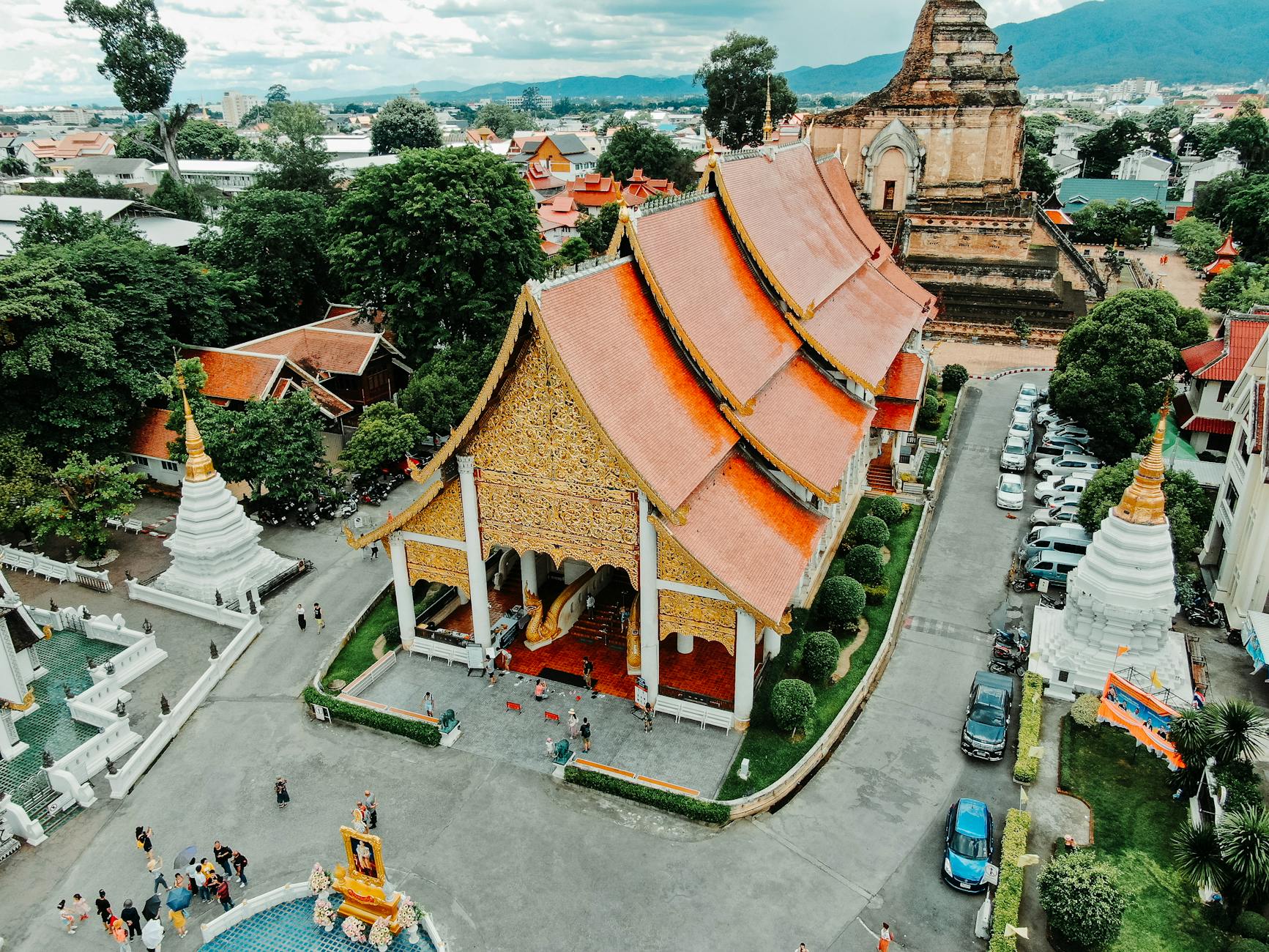

Planning a group trip to Chiang Mai is one of the smartest decisions you can make if you're looking for an affordable, culturally rich destination where every person in your group will find something magical. Unlike crowded beach resorts, Chiang Mai—Thailand's ancient cultural capital—rewards groups with authentic experiences that create lasting memories without breaking the bank. Whether you're gathering digital nomads, adventure seekers, or friends escaping their day jobs, this northern Thai city offers something for everyone: 300+ Buddhist temples draped in golden leaf, ethical elephant sanctuaries where you can interact responsibly with these magnificent creatures, world-renowned cooking schools where you'll learn to make pad thai from scratch, and a Sunday night market that pulses with life and incredible street food. The beauty of planning a group trip to Chiang Mai is that your collective energy amplifies every experience. Splitting accommodation costs, sharing cooking class fees, and exploring temples together transforms what could be an expensive vacation into an incredibly affordable adventure. With flights often under $200 from Bangkok, a month-long stay costing as little as $400-600 per person, and a thriving digital nomad scene that understands group dynamics, Chiang Mai is purpose-built for travelers who want authenticity, community, and value. Right now, 49 travelers on wondr are actively looking for companions to explore Chiang Mai together—meaning you're far from alone in seeking this experience. In this guide, we'll walk you through every practical detail of planning a group trip to Chiang Mai: how to coordinate logistics with your crew, where to stay that works for groups, what activities will actually bring you closer together, how much to budget, and how to navigate the logistics that often derail group travel plans. By the end, you'll have a clear roadmap for one of the most rewarding group adventures Southeast Asia has to offer.
How Much Does Planning a Group Trip to Chiang Mai Actually Cost?
When you're planning a group trip to Chiang Mai, the first conversation is always about money. The good news: it's one of the cheapest destinations in Asia without sacrificing quality or experience.
Daily Budget Breakdown (USD per person): - Accommodation: $6-15/night in shared dorms or budget guesthouses. Group-friendly options like Chiang Mai Backpackers ($8-12) on Chang Phueak Road offer shared kitchens where groups naturally congregate. A private 4-bed villa in the Nimman neighborhood runs $40-60/night total, so just $10-15 per person. - Food: $4-8/day if you eat street food (see: Sunday Walking Street market) and $8-15 if you mix in mid-range restaurants. The northern Thai specialty khao soi costs $1.50-3. Coffee culture is huge here—expect $1.50-2.50 for excellent iced lattes. - Activities: Cooking classes ($25-40 per person), temple visits (free-$5 suggested donation), ethical elephant sanctuary tours ($60-80 for 4-6 hours), Doi Inthanon National Park treks ($15-25). - Transport: Local transport is $0.30-1 per ride on red songthaews (shared trucks); motorcycle rentals $4-7/day; Grab (Southeast Asian Uber) $2-5 for most city rides.
Total Realistic Budget for 1 Week: $300-500 per person (accommodation, food, activities, local transport). Add $150-300 for flights depending on your departure city.
Michael Thompson, a budget-conscious traveler on wondr, shared: "Splitting a group villa with five friends brought my nightly accommodation down to $12. We cooked breakfast together most mornings, which meant more money for activities and exploring. The group dynamic made everything cheaper."
The key insight: groups automatically save money through shared accommodation, bulk meal costs, and divided transportation fees. Planning a group trip to Chiang Mai leverages this advantage better than almost anywhere else in the world.
Best Time to Visit and Why Season Matters for Group Coordination
November to February is the golden window for planning a group trip to Chiang Mai, and there's a reason every experienced traveler points to these months.
November-February brings cool, dry weather (60-75°F mornings, 80-85°F afternoons)—perfect for temple exploring, trekking Doi Inthanon's 8,415-foot summit, and sitting comfortably at night markets. Humidity drops dramatically compared to monsoon season (May-October), and you won't be drenched in sweat after 20 minutes of walking.
Why This Matters for Groups: - Better for coordinating schedules: You're not fighting weather delays or cancellations that scatter group plans - Peak season means more companions: This is when digital nomads flock to Chiang Mai. If you're planning a group trip to Chiang Mai and haven't finalized your crew, November-February makes it easier to meet like-minded travelers - All activities run consistently: Cooking schools operate full schedules, elephant sanctuaries maintain daily tours, and Doi Inthanon is accessible (roads can wash out June-October) - More group-friendly events: Sunday Walking Street (Nimmanhaemin Road) bustles with larger crowds, making group experiences feel more immersive
The tradeoff: January-February sees peak tourism, meaning accommodation prices can jump 20-30%, temples get more crowded, and you'll compete for cooking class spots. October and March-April are shoulder seasons—slightly cheaper, still warm but occasionally rainy, and fewer tourists crowding your group photos.
Emma Rodriguez, a cultural explorer, noted: "We went in mid-November and had perfect weather for our group's temple-hopping days. Early December got noticeably busier, but prices didn't jump too dramatically. If cost matters, aim for late November or early March."
Avoid: Mid-March to May (unbearable heat and air pollution from agricultural burning) and May-October (heavy monsoons make group outings frustrating).
Where to Stay When Planning a Group Trip to Chiang Mai
Finding accommodation that works for your entire group—different sleeping preferences, budgets, and social rhythms—requires strategic choices. Chiang Mai's neighborhoods offer distinct vibes that affect group dynamics.
Best Neighborhoods for Groups:
Nimman (Nimmanhaemin Road): The nerve center for digital nomads and young travelers. Lined with cafes, coworking spaces, craft breweries, and restaurants. Groups naturally mix here. Prices: $8-12/dorm, $15-25/private rooms, $40-70/private villas for 4+ people. Try: Punspace Coworking (accommodation + workspace), BED Phrasingh.
Old City (near Doi Suthep & Chang Phueak Road): More traditional, quieter, closer to major temples. Better for groups seeking cultural immersion over nightlife. $6-10/night for dorms. Walking distance to the Old City Sunday market and dozens of temples.
Chiang Mai Gate (Chang Phueak Gate area): Southeast of Old City, residential, cheaper. $5-8/dorm beds, popular with longer-term groups. Less touristy, more local.
Accommodation Types That Work for Groups:
Shared Dorms: Most affordable ($6-12/person), automatic community-building, shared kitchens for group meals. Places like Chiang Mai Backpackers or NapPark have group-friendly common areas.
Private Villas: Best for 4+ people. Rent a 2-3 bedroom villa in Nimman or Old City for $40-70/night total (~$10-17/person). Airbnb, Agoda, and Booking.com have thousands. Look for villas with communal kitchens and living spaces—they encourage group cooking and bonding. [Find hotels in Chiang Mai](/book/hotels-in/chiang-mai) to compare options across platforms.
Guesthouses with Communal Setups: Many family-run guesthouses rent small rooms ($10-15/person) with large shared courtyards where guests naturally congregate. This middle ground offers privacy with community vibes.
Olivia Bennett, part of a 6-person group trip, recommended: "We booked a private villa with a full kitchen for $55/night and split it six ways—that's $9 per person. We cooked together, ate breakfast as a group, and saved hundreds. Plus, having our own space meant we could decompress when we needed it."
Pro Tip for Groups: Book one large shared space rather than individual rooms. It's cheaper per person, keeps your group physically together (avoiding the "scattered across town" problem), and creates natural moments for planning daily activities together. [Plan your Chiang Mai trip](/plan?destination=Chiang%20Mai) and our AI will help optimize group accommodation logistics.
Must-Do Group Activities That Actually Create Lasting Memories
Planning a group trip to Chiang Mai means curating experiences that work for different personalities—the adventure seeker, the photographer, the foodie, the minimalist. These activities do that brilliantly.
Ethical Elephant Sanctuary Visit (Full Day, $60-85/person) Don't visit a place where elephants perform tricks. Instead, book with sanctuaries like Elephant Nature Park or Ran-Tong (both employ ethical practices and direct tourism revenue to elephant welfare). You'll trek into the forest, feed elephants in natural settings, bathe them in rivers, and learn their individual stories. Groups of 6-8 feel ideal—large enough to share the cost-per-person of the guide, small enough to maintain the experience's intimacy. Bring a change of clothes (you will get muddy and wet), high-SPF sunscreen, and a camera for the moment when an elephant wraps its trunk around your leg—genuinely one of the most moving experiences a group can share.
Thai Cooking Class (4-5 hours, $25-40/person) Choices range from crowded tourist-style classes to intimate home-cooking experiences. For groups, book with someone like Pantawan Cooking School (small group classes in someone's actual home kitchen, 10am-3pm, includes market visit). You'll navigate the local morning market together (cultural immersion), learn to make 4-5 dishes, eat what you cooked, and leave with genuinely transferable skills. Groups of 4-8 work well—you can work in pairs and share the learning curve.
Temple Exploration & Doi Suthep Trek (Half Day, Free-$5) Doi Suthep temple sits 3,520 feet above the city on a mountain accessed by a 300-step staircase through the forest. The view of Chiang Mai sprawling below is staggering. Groups naturally break into smaller sub-groups here (some climb fast, others take their time), but reuniting at the temple for tea and observation creates a shared moment. Hire a local guide ($30-50 split among your group) who'll explain the temple's history and point out details you'd otherwise miss. Then visit Doi Pui summit temple at 5,250 feet—fewer tourists, equally beautiful, and the drive down offers stunning vistas.
Doi Inthanon National Park Trekking (Full Day, $15-25 entry fee, $40-60 guide) Thailand's highest peak (8,415 feet) features misty trails through old-growth forest, waterfalls, and the iconic Doi Inthanon temple twin chedis visible for miles. Hire a park guide (required for backcountry trails) and trek for 4-6 hours. The shared challenge of climbing—the altitude, humidity, occasional slippery sections—bonds groups powerfully. Pack light snacks, plenty of water, and start early (before 7am) to avoid afternoon rain.
Sunday Walking Street Night Market (Free, Budget $20-40 for food/shopping) Every Sunday, Nimmanhaemin Road closes to traffic and fills with vendors selling crafts, clothes, art, and street food. Groups naturally scatter and regroup here—the format encourages exploration and spontaneous recommendations ("You have to try this mango sticky rice"). The energy is electric. Arrive by 5pm for the best food vendors; crowds peak 6-8pm. This is where your group will have informal moments—the friend who discovers a favorite local artist, the shared meal of grilled fish cakes, the photo that becomes the trip's defining image.
James Chen, a cultural enthusiast on wondr, reflected: "The Sunday market was chaos in the best way. Our group split up for 90 minutes, found different things, then met back at a food stall. Hearing everyone's discoveries felt like we'd been to five different countries."
Night Bazaar (Free, Budget $25-50) Chiang Mai's largest night market (Anusarn Market area) offers genuine local atmosphere—less polished than Sunday Walking Street, more "this is where locals actually shop." Your group can haggle together, try unfamiliar street foods, and feel like you've discovered a secret. Best 6-9pm.
Logistics: Flights, Transport, Visa, and Currency Essentials
Getting Flights to Chiang Mai
Most international travelers fly into Bangkok's Suvarnabhumi Airport, then connect to Chiang Mai (1 hour, $30-60 on budget carriers like Thai AirAsia or Nok Air). Alternatively, some airlines offer direct flights from Asian hubs (Kuala Lumpur, Singapore). [Book flights to Chiang Mai](/book/flights-to/chiang-mai) via Google Flights, Skyscanner, or regional travel sites.
For Groups: Use a shared spreadsheet to track everyone's flight times and arrival dates. Coordinate who's arriving when so you can arrange a group pickup or meet at your shared accommodation. Grab rides ($8-15 from airport to most neighborhoods) are cheaper split six ways.
Visa Requirements
Most Western nationals get a 30-day visa-exempt entry to Thailand. Check the official Thailand tourism board and your country's embassy for current requirements. U.S. citizens can reference travel.state.gov for the latest travel advisories; UK travelers should check gov.uk/foreign-travel-advice/thailand. If you're staying longer than 30 days, apply for a Thai Tourist Visa (60 days, ~$40) at any Thai embassy before arrival, or request a "Visa Run" to Myanmar or Laos (cheap, overnight trip).
Currency & Money
Thailand uses Thai Baht (THB). Exchange rates hover around 33-35 Baht per USD. Withdraw cash from ATMs (small fees of ~100 Baht/$3) or exchange at banks (slightly better rates, no fees). Most restaurants, markets, and shops accept cash. Credit cards work in malls and upscale restaurants but come with 2-3% fees. For groups, one person managing a shared cash pool for group meals and activities simplifies the accounting.
Getting Around Chiang Mai
- Songthaews (Shared Red Trucks): $0.30-1 per ride. Flagging one down requires pointing and saying your destination—the driver will nod when going that way. Groups often need 2-3 vehicles. - Motorcycle Rentals: $4-7/day, helmets required by law. Many travelers rent several bikes for group exploration, but driving standards are lax—decide as a group if this feels safe. - Grab App: Download Grab (Southeast Asia's Uber). Costs $2-5 for most in-city rides, GPS-tracked (safer), good for splitting fares. - Taxis: Licensed taxis (red and cream colored) are cheaper than Grab if you're comfortable negotiating fares.
Pro Tip for Groups: Assign one person as the "transportation coordinator." They handle booking shared pickups, negotiate songthaew routes, and keep everyone on schedule. It prevents the chaos of people arriving at different times.
Marcus Johnson noted: "We downloaded Grab together and split every ride. Sometimes our group of five crammed into one car, sometimes two Grabs. Never spent more than $2-3 per person per ride, and we knew exactly how much we'd spent by the end of the day."
Find Travel Companions for Chiang Mai on Wondr
One of the biggest challenges when planning a group trip to Chiang Mai is assembling your group in the first place. If you don't have a ready-made friend group heading to Thailand, or you want to expand your circle with other adventurous travelers, finding like-minded companions changes everything.
Right now, 49 travelers on wondr are actively looking for companions to explore Chiang Mai together. These aren't random party tourists—they're cultural explorers, digital nomads, budget travelers, and adventure seekers specifically seeking community-focused travel. Some are looking for one travel buddy; others are assembling crews of 5-10 people.
Why finding companions on wondr matters for your Chiang Mai trip: - Aligned Values: You connect with people who share your travel style (budget-focused, culture-first, adventure-driven) - Group Chemistry: Multi-person groups formed through wondr naturally gel because everyone's intentional about the experience - Shared Costs: Groups split accommodation, guides, and transport—one person's budget trip becomes affordable for everyone - Accountability: When you've committed to traveling with others, you're more likely to actually book and go - Local Knowledge: If anyone in your companion group has been to Chiang Mai before, they become your insider guide
When you're planning a group trip to Chiang Mai, wondr's platform lets you: - Specify your travel dates (crucial for coordinating arrivals) - Set your budget preferences ($300-500/week aligns perfectly with Chiang Mai) - Describe your interests (temples, cooking classes, ethical sanctuaries, nightlife—whatever matters) - See who else is heading to Chiang Mai and message them directly
Sarah Mitchell, who found her Chiang Mai group through wondr, shared: "I initially planned to go solo, but found three other travelers on wondr heading the same week. We coordinated a shared villa, split cooking duties, and I went from planning a solo trip to having one of the most connected travel experiences of my life. We're still friends."
[Find travel companions for Chiang Mai](/find-companions/chiang-mai) and start building your group today. You'll see profiles of other travelers, their travel dates, budget ranges, and interests. Message a few people, see who's enthusiastic, and start coordinating your shared experience.
Pro Tips to Make Your Group Trip Run Smoothly
Create a Shared Google Doc Before You Go
One collaborative document becomes the nervous system of your group trip. Include: flight arrival/departure times, accommodation address and check-in times, daily activity itineraries, shared expenses (who paid for the villa, group meals, guides), and a communication protocol (WhatsApp group, daily check-in time). Sound overly organized? Groups that skip this step invariably have someone missing an activity, confused about the address, or disagreeing about how much they spent.
Agree on Activity-Sharing Before Departure
Some people will want to do everything together; others will want solo exploration time. Establish norms: Is every meal together? Do you have scheduled group activities with free time in between? Does someone get a day completely alone? Clear expectations prevent resentment ("I can't believe you went to the market without me") and allow introverts to recharge.
Designate a Group Treasurer
If you're splitting accommodation, meals, and guide costs, one person tracking shared expenses saves arguments later. Use an app like Splitwise—everyone photographs receipts, logs the amount, and Splitwise calculates who owes whom. Settle up when you leave.
Build in Flexibility
Planning a group trip to Chiang Mai sometimes means your carefully researched elephant sanctuary booking fills up, or someone wants to extend their stay, or you discover an amazing street food tour you didn't know about. Have 2-3 backup activities and acknowledge that plans will shift. Rigidity kills group trip joy.
Respect Different Paces
Temple hopping involves a lot of walking. Elephant sanctuaries are physically demanding. Doi Inthanon trekking is actually challenging. Not everyone moves at the same speed. Plan routes where people can move at their own pace and regroup at the destination. Assign a group meeting time ("Let's meet at the temple entrance at 1pm") rather than forcing everyone into a single line.
Communicate About Nightlife Early
Some travelers love Chiang Mai's night markets and chill craft beer scene; others want club experiences. Be honest: does your group want to rage out at Zoe in Yellow bar, or would you rather find a quiet temple-overlooking restaurant? Different expectations here create the most friction. Agree that people can do their own thing in evenings if interests diverge.
💡 เคล็ดลับด่วน", blog_more_stories: "เรื่องราวเพิ่มเติม
- →Book accommodation (villa, guesthouse, or dorm) for 4+ people a month in advance during November-February peak season; group rates lock in better prices
- →Split an Airbnb villa in Nimman for $40-70/night total ($10-17/person)—you'll save 40-50% compared to individual hotel rooms
- →Visit Doi Suthep temple early (before 8am) with a group guide ($30-50 split among you) to avoid crowds and catch morning light on the golden chedi
- →Hire a private cooking class instructor for your group (Pantawan, Mama Noi's) rather than joining tourist crowds; 4-8 people get better prices and personalized teaching
- →Use Splitwise app from day one to track group expenses; settles arguments about who paid for what
- →Arrive in Chiang Mai Sunday afternoon to hit the Walking Street night market the same evening—builds instant group energy and sets the cultural tone
- →Book ethical elephant sanctuary tours with pre-established sanctuaries (Elephant Nature Park, Ran-Tong) at least 3 days ahead; group discounts apply and spots fill quickly
- →Agree on your group's nightlife preferences before arrival; Chiang Mai culture suits low-key exploring over clubs, so manage expectations early

Share this deal
พร้อมไปเที่ยว Chiang Mai?
ดูโรงแรม กิจกรรม และดีล — หรือให้ AI สร้างแผนเต็มรูปแบบ